
MacBook Pro Running Hot? Here’s Why and How to Cool It Down
That moment when your hands start sweating—not because of work stress, but because your MacBook Pro is running hot. Your fingers hover over the keyboard, and the base of the Mac feels like a stovetop. Sounds familiar?
You’re not imagining it. Whether you’re using an Intel-based MacBook Pro or one of the latest M1/M2 models, heat buildup is a real issue. But it doesn’t have to be your daily normal.
Why Is Your MacBook Pro Overheating?
1. High-Performance Apps Using Too Many Resources
Video editors, developers, designers—we all use resource-intensive tools. Final Cut, Xcode, Logic Pro, Figma, VS Code… These apps push your CPU and GPU hard. And more power = more heat.
Even modern Apple Silicon chips heat up when stressed for long periods, especially if multiple apps run in parallel.
2. Background Tasks That Never Sleep
Cloud services like Dropbox, OneDrive, iCloud Drive, and email sync tools are often guilty of constant CPU usage. Combine that with Chrome’s tabs running scripts in the background, and your Mac is constantly working—even when you’re not.

3. Poor Ventilation and Workspace Setup
Using your MacBook on a blanket, pillow, or couch? Bad airflow = trapped heat. Even a 5°C increase in chassis temperature makes the fan spin earlier and louder—especially on Intel Macs.
4. High Ambient Temperature
On hot days, your Mac has to work harder to cool itself. If the environment is warm, the fan has less effect—and your device heats up faster than it can cool down.
5. macOS Processes After Wake
After sleep or startup, macOS triggers Spotlight indexing, iCloud syncs, system checks… These invisible jobs can spike CPU usage, especially if your system hasn’t restarted in a while.
The Risks of Ignoring Overheating
- ⚠️ Battery damage — high temps reduce long-term capacity
- ⚠️ CPU throttling — performance drops to stay cool
- ⚠️ Fan wear — constant spinning shortens lifespan
- ⚠️ Reduced lifespan — consistent heat = early hardware aging
How to Fix a MacBook Pro That’s Running Hot
✅ Step 1: Launch Activity Monitor
Open Activity Monitor → CPU and sort by “% CPU”. You’ll quickly spot the greedy apps. Look for browser processes, cloud sync tools, or even old system daemons misbehaving.
✅ Step 3: Improve Ventilation
Use a laptop stand to lift your MacBook Pro and allow air to circulate. You don’t need expensive gear—anything that keeps the base off a surface will help reduce overheating.
✅ Step 4: Keep Your Workspace Cool
Room too hot? Fan on low? Mac near a sunny window? All of that affects heat dissipation. A cool room = a cooler Mac = less fan stress.
✅ Step 5: Restart Regularly
macOS is solid—but it benefits from reboots. They clear RAM, kill stuck background tasks, and reset thermal sensors. Restart at least once every 2–3 days for optimal performance.

No need to reopen everything. No need to sign in again. Just pause and resume when needed. It’s fast, clean, and your Mac stays cool.
Bonus: Auto-Pause
Who Needs This Guide?
This isn’t just for tech pros. If you:
- 🔋 Work all day unplugged
- 💻 Run multiple apps at once
- 🎧 Use your Mac in meetings or studio setups
- 🛏️ Feel your Mac heat up even when “doing nothing”
Conclusion: A Cooler Mac Is a Better Mac
If your MacBook Pro is running hot, don’t ignore the signs. Performance drops, batteries suffer, and your daily experience gets worse. But the fix doesn’t require deep tech skills or new hardware.
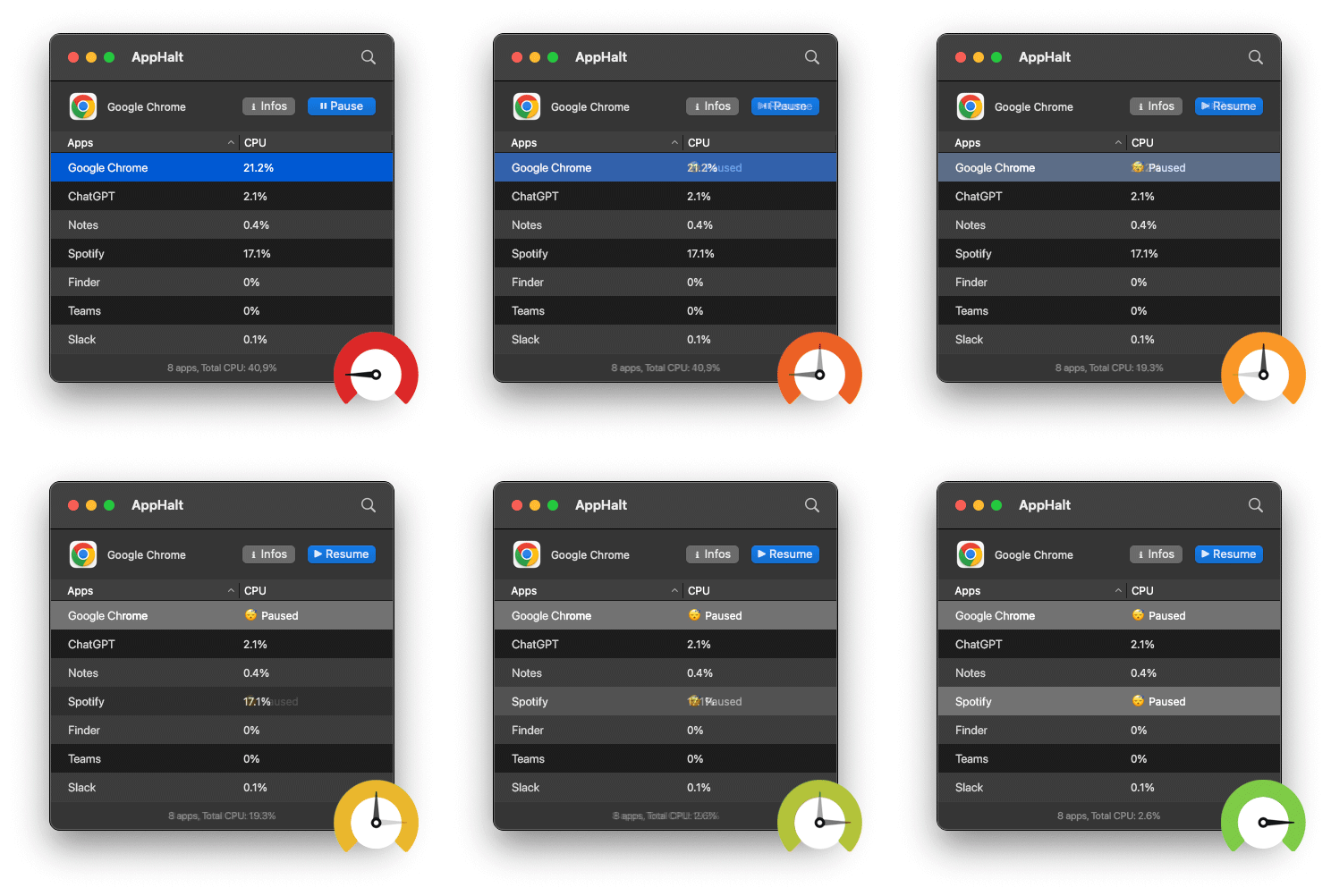
Pause unnecessary apps, reduce CPU load, and prevent overheating in one click—while keeping your workflow intact.
- ✅ Stop overheating from background activity
- ✅ Extend battery and fan lifespan
- ✅ Focus on work—not fan noise
Where AppHalt may help
If Activity Monitor shows a regular app you recognise using resources while you do not need it, AppHalt gives you a reversible option: pause that selected app without quitting it, then resume it later. AppHalt does not repair macOS or guarantee a speed, temperature, battery, or stability result; the effect depends on what the app was doing.
Do not pause an app that is uploading, syncing, backing up, rendering, recording, playing media, or handling a call you need to continue.