
Your Mac looks quiet. No big app is open. Maybe only the desktop is visible. But the fan is still running.
It feels strange because, from your point of view, nothing is happening. No video export. No game. No large file transfer. No heavy creative app.
Yet your Mac may still be working hard in the background.
If your Mac fan is running with no apps open, the problem is usually not “nothing”. It is often hidden activity: background processes, browser helpers, sync tools, indexing, system services, or apps that stayed open even after their windows were closed.
This article explains what is really happening, how to check it without getting lost in technical details, and how AppHalt can help you reduce background activity without quitting your entire workspace.
Mac fan running with no apps open: the simple explanation
When your Mac fan runs, it usually means your Mac is trying to cool itself down. Heat often comes from CPU activity, graphics activity, charging, external displays, browser tabs, system processes, or apps doing work in the background.
The confusing part is that “no apps open” does not always mean “nothing is running”.

On macOS, an app can still be active even when:
- its window is closed;
- it is hidden behind another window;
- it is sitting in the Dock;
- it has background helper processes;
- it is syncing, indexing, updating, or checking notifications;
- it launched automatically at login.
So the real question is not only “What apps do I see?”
The better question is:
What is still working in the background?
Why closing a window does not always stop an app
This is one of the biggest differences between how many people think macOS works and how it actually works.
On Mac, clicking the red close button often closes the window, not the entire app. The app can remain open in the Dock and may continue to run background tasks.
For example, you might close a browser window, a notes window, a design file, or a document window, but the app itself can still be running. This can be convenient because reopening your work is faster. But it can also mean background activity continues longer than you expect.
This is why a Mac can feel busy even when the screen looks calm.
Common reasons your Mac fan runs when nothing seems open
There is rarely one universal cause. Most of the time, fan noise comes from one or several background activities stacking together.
1. Browser helper processes
Browsers are often the first place to check. Chrome, Safari, Edge, Firefox, Brave, and other browsers can run multiple processes in the background.
Even one browser can include:
- tabs;
- extensions;
- video players;
- web apps;
- notification services;
- rendering processes;
- background pages.
A browser window may look closed or inactive, but a helper process can still be active. This is especially common with web apps, dashboards, email clients, social platforms, streaming sites, and collaborative tools.
2. Cloud sync and file indexing
iCloud Drive, Dropbox, Google Drive, OneDrive, Notion, Obsidian, photo libraries, and similar tools can work quietly in the background.
They may be:
- syncing recent files;
- checking cloud changes;
- building previews;
- indexing content;
- uploading or downloading updates;
- resolving file conflicts.
This is useful work, but it can make your Mac feel active even when you are not actively using those apps.
3. Spotlight and system indexing
After updates, migrations, large file imports, or external drive changes, macOS may index content in the background.
This can temporarily increase CPU activity. It is usually normal, but it can feel confusing because the user did not “open” anything.
4. Apps left open in the Dock
Some apps keep working after their main window is gone. Messaging apps, email apps, design tools, launchers, note apps, and productivity tools can stay active in the Dock.
They may check for notifications, refresh data, keep databases open, or maintain background services.
This is why “I closed the window” is not the same as “the app stopped”.
5. External displays and visual load
If you use an external monitor, high resolution, scaling, multiple desktops, or many open windows, your Mac may work harder to render the interface.
This can involve system processes rather than a single visible app. In that case, quitting random apps may not fully solve the issue, but reducing unnecessary open windows and background app activity can still help lower overall load.
6. A stuck or runaway process
Sometimes an app or helper process gets stuck. It may use CPU continuously even when it should be idle.
This can happen after a failed sync, a browser tab issue, a plugin problem, a large document, a broken preview, or a background task that never finishes.
This is where Activity Monitor can help, but it can also feel intimidating if you are not used to reading CPU numbers and process names.
How to check what is making your Mac fan run
You do not need to become a system administrator. Start with a simple check.
Step 1: Open Activity Monitor
Open Activity Monitor from Applications > Utilities, then click the CPU tab.
Sort by CPU usage. The apps or processes at the top are the ones currently asking your Mac for the most processing power.
Do not panic if you see unfamiliar names. Many process names are normal macOS services or app helpers. The goal is not to kill everything. The goal is to identify what is unusually active.
Step 2: Look for apps you recognize
Focus first on names you understand:
- browser names;
- design tools;
- video apps;
- cloud sync tools;
- messaging apps;
- productivity apps;
- apps you opened earlier and forgot about.
If an app you are not using is still active, it may be a good candidate to close, quit, or pause.
Step 3: Check if the activity is temporary
Some activity is normal and temporary. If Photos is analyzing images, Spotlight is indexing, or a cloud app is finishing a sync, the fan may calm down after a while.
But if the same app keeps using CPU again and again when you do not need it, it may be worth taking action.
Why quitting apps is not always the best answer
Quitting apps can reduce background activity. But it also has a cost.
When you quit an app, you may lose your current working context. You might need to reopen documents, tabs, dashboards, conversations, or projects later.
This is why many Mac users keep apps open all day. They want their workspace ready. They do not necessarily want every app to keep working in the background.
That is the gap AppHalt is designed to solve.
The AppHalt approach: pause apps without closing them
AppHalt gives you a middle option between leaving everything running and quitting everything.
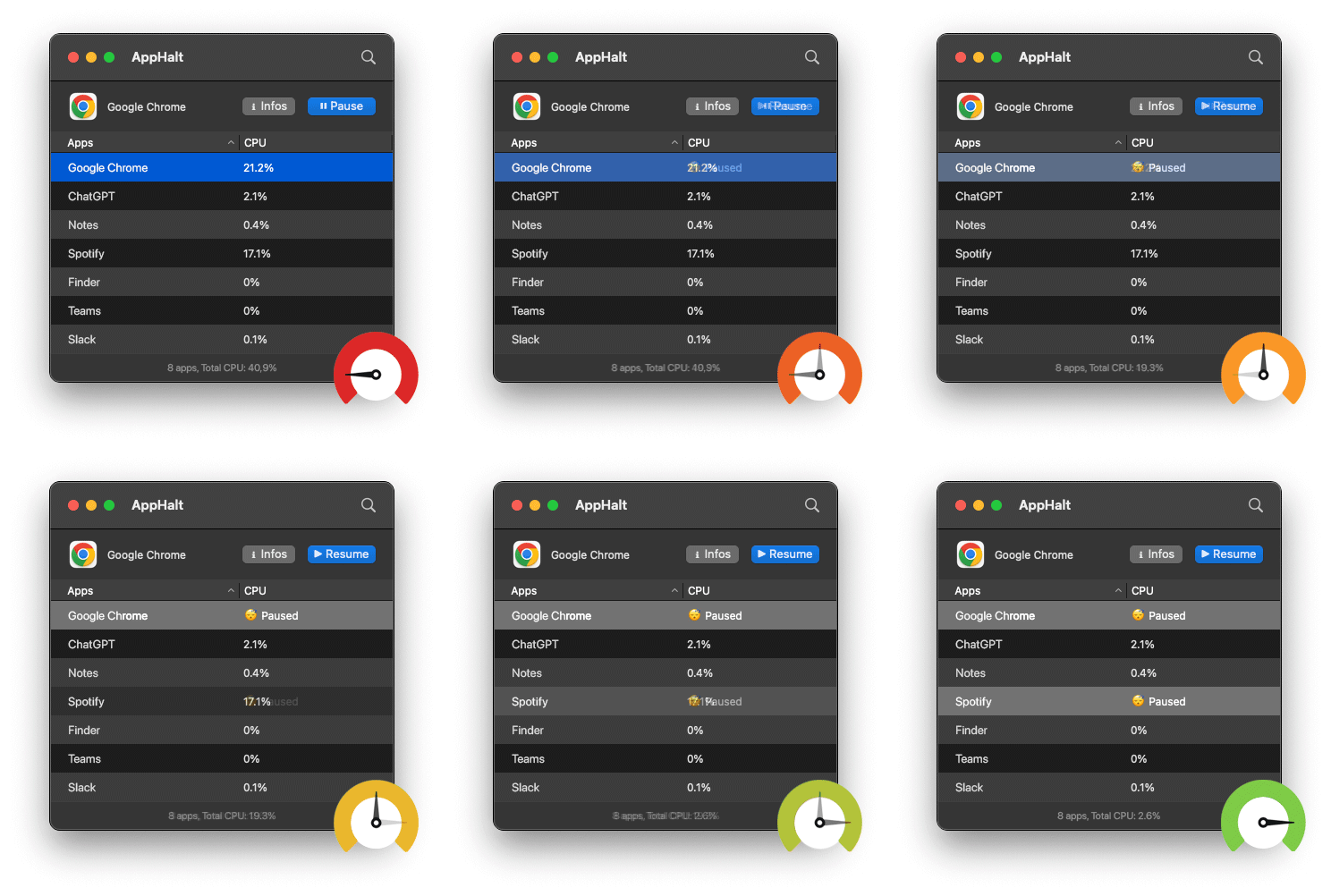
With AppHalt, you can pause unused apps so they stay open but stop using CPU until you resume them.
This is useful when:
- you want to keep your workspace open;
- you do not need a specific app right now;
- an app is using CPU in the background;
- you want your Mac to feel calmer;
- you do not want to manage everything through Activity Monitor.
Instead of asking “Should I quit this app?”, AppHalt helps you ask a better question:
Do I need this app to keep working right now?
If the answer is no, pausing can be a better fit than quitting.

What AppHalt can help with — and what it should not do
AppHalt is not a magic fan-control tool. It does not pretend every fan issue comes from user apps. Heat can also come from charging, ambient temperature, hardware issues, system services, external displays, browser bugs, or macOS activity.
That honesty matters.
AppHalt is most useful when user apps or app-related processes are contributing to unnecessary background activity.
Good candidates include:
- a browser you are not currently using;
- a design app left open between tasks;
- a chat app you do not need for a while;
- a productivity app sitting in the background;
- a tool that keeps refreshing or syncing unnecessarily;
- an app that appears active even when you are not using it.
AppHalt should not be used to randomly pause important system processes you do not understand. The point is control, not reckless optimization.
Why activity levels are easier than raw CPU numbers
CPU percentages can be confusing. Is 3% high? Is 15% normal? Why does one process spike and then disappear?
AppHalt makes this easier by translating activity into simple levels such as Low, Moderate, High, or Very high.
The activity level gives you the meaning. The CPU percentage gives you the proof.
For example:
- Low · 2% CPU means the app is doing light work.
- Moderate · 8% CPU means the app is more active.
- High · 17% CPU means the app may be worth pausing if you do not need it.
- Very high · 34% CPU means the app is clearly using noticeable processing power.
This keeps AppHalt simpler than Activity Monitor while still giving you useful information.
Why the current app is protected
If you are actively using an app, AppHalt should not get in your way.
That is why AppHalt protects the current app. If you are writing, browsing, designing, editing, or presenting, the active app is treated differently from background apps.
This matters because the goal is not to interrupt your work. The goal is to reduce what is happening behind it.
A practical routine when your Mac fan runs with no apps open
Here is a simple routine you can follow:
- Give it a minute. Some background activity is temporary.
- Check Activity Monitor. Sort by CPU and look for recognizable apps.
- Close unnecessary windows. Especially browser tabs and web apps.
- Quit apps you do not need anymore. This is useful for apps you are done with.
- Pause apps you want to keep open. This is where AppHalt is useful.
- Restart if something feels stuck. A restart can clear some temporary issues.
- Investigate hardware or system causes if it keeps happening. Persistent fan noise with low CPU may need deeper troubleshooting.
This routine avoids panic. It also avoids the common mistake of randomly force-quitting processes without understanding what they do.
FAQ: Mac fan running with no apps open
Why is my Mac fan loud when I am not doing anything?
Your Mac may still be running background tasks. Apps, browser helpers, sync tools, indexing services, and system processes can continue working even when no large window is visible.
Does closing a window stop the app?
Not always. On macOS, closing a window often leaves the app running. To fully quit an app, you usually need to use Quit from the app menu or Command-Q.
Should I force quit everything in Activity Monitor?
No. Force quitting random processes can interrupt useful work or cause problems. Start with apps you recognize and no longer need.
Can AppHalt stop my Mac fan?
AppHalt can help reduce unnecessary background activity from apps you pause. If fan noise is caused by user apps using CPU, that can help. If the cause is hardware, charging, system services, external displays, or thermal conditions, AppHalt may not fully solve it.
Is pausing the same as quitting?
No. Quitting closes the app. Pausing keeps the app open but stops it from using CPU until you resume it.
Use AppHalt when your Mac feels busy for no reason
A Mac fan running with no apps open can feel mysterious, but it usually means something is still active in the background.
The best solution is not to panic, force quit everything, or obsess over every process. The better approach is to understand what is active, decide what you need, and reduce unnecessary background work.
AppHalt helps you do exactly that.
You can keep your workspace open, pause apps you are not using, and resume them later when you need them again.
Try AppHalt
AppHalt helps you pause unused Mac apps without quitting them. Keep your workspace open, reduce background activity, and resume apps whenever you need them.
To identify the workload behind persistent fan noise, check Activity Monitor on your Mac before force-quitting anything.