
Mac Running Slow After Monterey Update? Here’s How to Fix It (Fast)
You were excited for macOS Monterey. Sleek new features, redesigned Safari, better security. You installed it—and now your Mac is running slow. Apps launch slower, battery drains faster, and the spinning beachball has returned like an old nemesis.
Don’t worry—you’re not alone. Thousands of Mac users experience sluggish performance right after a major macOS update. And no, it’s not just your imagination—or a sign that you need a new Mac.
In this guide, we’ll explain why it happens and how to fix it—with simple, effective solutions (including one tool you’ll wish you had installed sooner).
Why Is Your Mac Slow After Updating to Monterey?
1. Spotlight Indexing in the Background
After a major system upgrade, Spotlight reindexes your entire drive. That means scanning every file, app, document, and email—using both CPU and disk at full capacity. This can take hours.
2. System Services Reinitializing
macOS Monterey triggers background activity post-update: iCloud sync, Photos analysis, Mail indexing, and more. These silent processes eat up resources even if you’re not using those apps.

3. Older Apps Not Yet Optimized
Some of your favorite tools may not be fully optimized for Monterey yet. These apps can behave unpredictably—using too much memory, freezing, or lagging your whole system.
4. Not Enough Free Disk Space
The Monterey installer alone takes several gigabytes. And after the update, temp files and swap space can overwhelm your SSD—especially if you’re under 20% free space. That means lag, spinning cursors, and longer boot times.
5. App Launch Storm After Reboot
When you restart post-update, all your usual apps and login items start together—Dropbox, Slack, Chrome, etc. They battle for RAM and CPU before the system has even fully stabilized.
How to Fix a Slow Mac After the Monterey Update
✅ Step 1: Wait for Spotlight to Finish
Click the magnifying glass in the menu bar. If it says “Indexing,” let it finish. Keep your Mac plugged in and idle for 30–60 minutes. Things will get smoother once it completes.
✅ Step 3: Disable Unneeded Startup Apps
Go to System Settings → General → Login Items and remove anything non-essential. Let your Mac breathe after boot instead of launching 12 apps at once.
✅ Step 4: Free Up Disk Space
Use the “About This Mac → Storage” panel to identify large files, caches, and installers. Delete old Xcode archives, video exports, or unused apps. Aim for at least 15–20% free space.
✅ Step 5: Restart Your Mac Regularly
Post-update, macOS may require a few restarts to stabilize background tasks and services. Restarting once a day for the first week can solve many issues.

Bonus: Turn Off “Reopen Windows at Login”
This simple tweak avoids auto-relaunching all apps after restart:
- Go to System Settings → Desktop & Dock
- Turn off “Close windows when quitting an application”
This prevents macOS from reloading everything you had open before the update.
It lets you pause apps with a click, cool down your CPU, stop the fan from spinning, and restore responsiveness. No reboots. No quitting. No stress.
Smart Sleep to the Rescue
Thousands of Users Experienced This
Conclusion: Monterey Slowed You Down? It Doesn’t Have To.
If your Mac is running slow after updating to Monterey, don’t panic—and don’t format everything. It’s often just temporary background activity + startup overload.
Because updates should make things better, not worse.
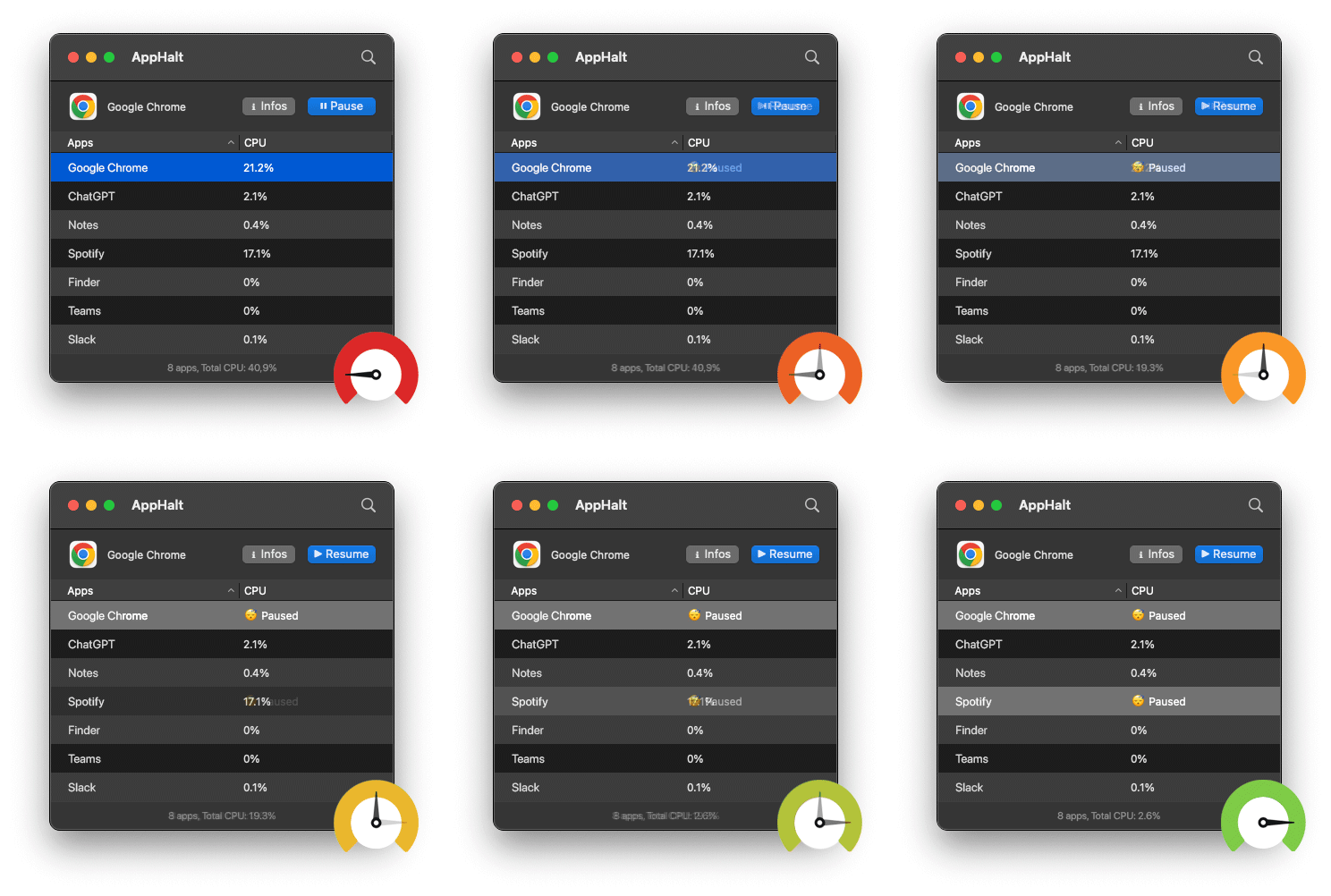
Pause noisy apps, calm background activity, and restore your Mac’s speed—without quitting your workflow.
- ✅ One-click app pausing
- ✅ Reduce post-update CPU load
- ✅ Get your Mac back to smooth
Where AppHalt may help
If Activity Monitor shows a regular app you recognise using resources while you do not need it, AppHalt gives you a reversible option: pause that selected app without quitting it, then resume it later. AppHalt does not repair macOS or guarantee a speed, temperature, battery, or stability result; the effect depends on what the app was doing.
Do not pause an app that is uploading, syncing, backing up, rendering, recording, playing media, or handling a call you need to continue.