
Mac Lagging While Multitasking? Here’s How to Regain Speed and Focus
You’re in your flow. Figma is open, Chrome has 12 tabs, Zoom’s running in the corner, Spotify’s playing your focus playlist, and Slack… well, Slack never sleeps. Then boom—everything stutters. Your Mac starts lagging while multitasking. Windows freeze. The cursor jumps. Even typing feels delayed.
If you’re juggling multiple apps and your Mac just can’t keep up, this article is for you. Whether you’re on an Intel Mac or a shiny new M1/M2 chip, multitasking without slowdown is possible—if you know where the bottlenecks are.
Why Your Mac Struggles with Multitasking
1. RAM Is Maxed Out
macOS handles memory well, but with 10+ apps open and dozens of browser tabs, even 16GB RAM can get overwhelmed. When your RAM fills up, macOS starts using the SSD as swap memory—which is slower and causes lag spikes.
2. Background Apps Fighting for CPU
While you focus on one app, others run tasks silently—syncing files, checking for updates, or rendering visuals. Slack, Dropbox, Teams, and Adobe apps are notorious for this. Result? CPU overload and sluggish performance.
3. Browser Tabs Consuming Resources
Each tab = more RAM, more GPU. YouTube? Even worse. If you’re a tab hoarder, you’re draining system resources without realizing it.
4. GPU/CPU Saturation from Creative Work
Design tools, video editors, IDEs, 3D previews… they’re heavy. Combine two or more, and even an M1 chip starts sweating. The system juggles processes, but at the cost of frame drops, delays, and animations stutter.
5. Too Many Login/Startup Apps
Many users never clean up their login items. So every time you boot, 8–12 apps launch automatically—even if you don’t use them immediately. They keep running in the background, slowing everything down.
How to Make Your Mac Fast While Multitasking
✅ Step 1: Open Activity Monitor
Go to Applications → Utilities → Activity Monitor. Sort by “Memory” or “% CPU”. You’ll likely find a few culprits using more resources than they should (hello Chrome, we see you).
Think of it like putting apps in “power-saving mode.” Figma, Notion, Slack, or Discord are all perfect candidates. Your CPU and RAM breathe easier, and you stay focused.
✅ Step 3: Limit Active Tabs and Windows
Use tab managers like Tab Wrangler or OneTab. Keep fewer windows open at once. And for resource-hungry web apps, consider using dedicated Mac apps (e.g. Spark instead of Gmail in Chrome).
✅ Step 4: Restart Every Few Days
Even M1 Macs benefit from reboots. It clears memory leaks, zombie processes, and resets swap memory. If you haven’t restarted in a week, you’re working with digital clutter slowing you down.
✅ Step 5: Disable Unused Startup Apps
Head to System Settings → General → Login Items. Disable anything that doesn’t need to launch every time. Less clutter = more performance available for what you’re actually using.
Instead of quitting your tools, just pause them. No loss. No reloads. No reconnections. Just instant relief for your CPU and memory.
Smart Sleep for Smarter Performance
Real-World Multitasking Without Lag
- 🎨 Figma open
- 💬 Slack paused
- 📁 Dropbox paused
- 🎵 Spotify minimized
- 🌐 Browser tabs under control
Result? No beachballs. No fan bursts. Just smooth performance, even with limited RAM.
Conclusion: Multitask Without the Meltdown
If your Mac lags while multitasking, it’s not about needing a new machine. It’s about using your current one smarter. Less background noise = more power where you need it.
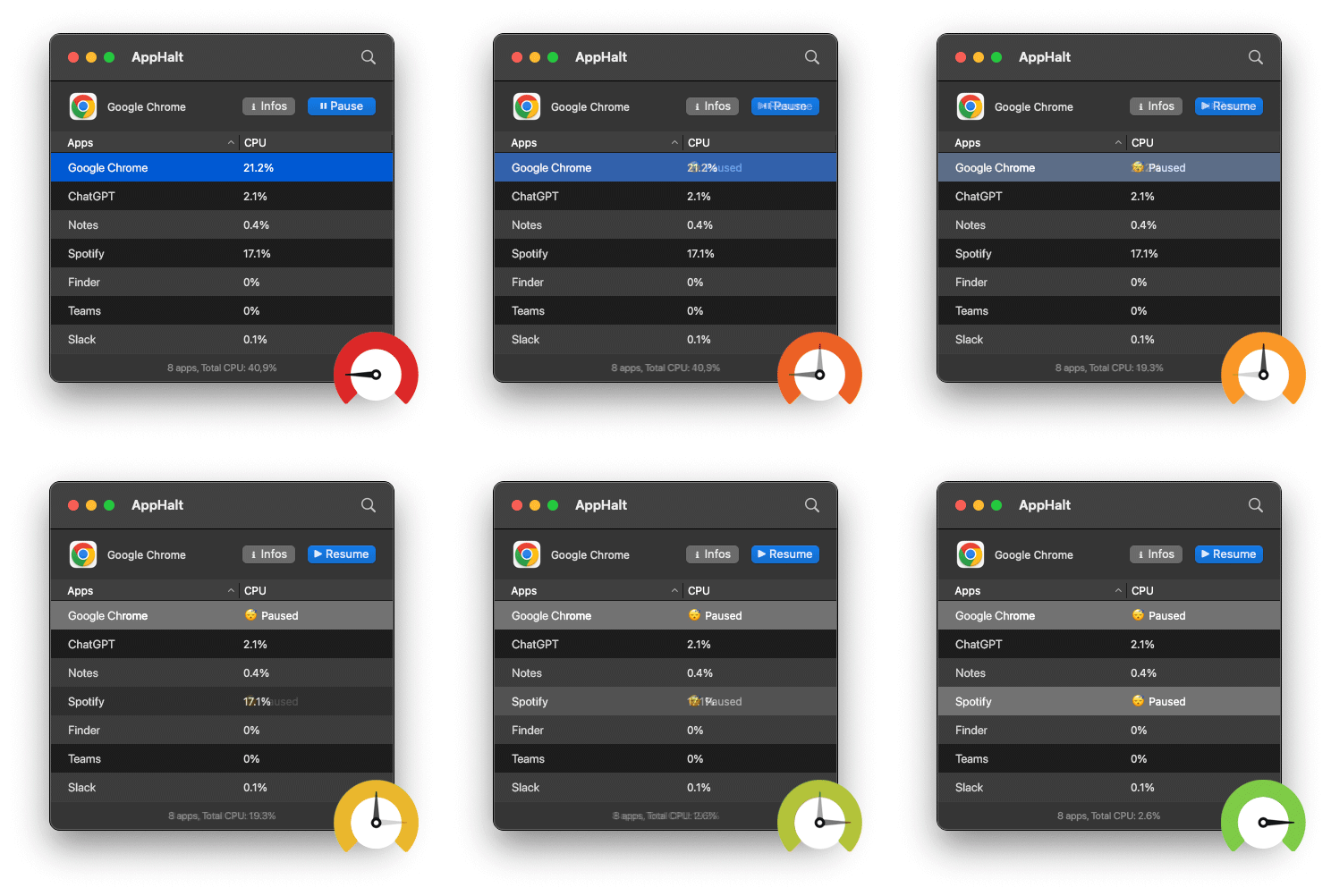
Pause apps you’re not using. Free up resources. Work faster—without quitting anything.
- ✅ Pause heavy apps without closing them
- ✅ Reduce lag instantly
- ✅ Stay productive and efficient
Where AppHalt may help
If Activity Monitor shows a regular app you recognise using resources while you do not need it, AppHalt gives you a reversible option: pause that selected app without quitting it, then resume it later. AppHalt does not repair macOS or guarantee a speed, temperature, battery, or stability result; the effect depends on what the app was doing.
Do not pause an app that is uploading, syncing, backing up, rendering, recording, playing media, or handling a call you need to continue.