If your MacBook battery drains faster after installing the macOS 27 beta, the first thing to know is this: it does not automatically mean your battery is damaged.
Beta versions of macOS are exciting because they let you try new features early. But they can also use more power than a stable public release, especially during the first hours or days after installation.
With macOS 27 Golden Gate, your Mac may be doing more than usual in the background: indexing files, syncing iCloud data, analyzing photos, updating apps, rebuilding caches, checking permissions, and running beta-level system processes that are not fully optimized yet.
That extra activity can make your MacBook feel warmer, slower, louder, and less efficient on battery.
This guide explains why macOS 27 beta battery drain happens, what is normal after a beta update, how to find the real cause, and how to reduce battery drain safely without breaking your workflow.
Quick answer: if macOS 27 beta is draining your MacBook battery fast, wait for post-update indexing to finish, check Activity Monitor’s Energy tab, identify apps using significant energy, reduce browser tabs, pause unused apps, stop cloud sync, review Login Items, lower brightness, enable Low Power Mode when needed, and avoid judging battery life too early after the beta install.
Why macOS 27 beta can drain MacBook battery
A macOS beta is pre-release software. It is designed for testing, not guaranteed daily perfection.
Battery drain can happen because your Mac is doing more work than usual after the update, or because some apps are not yet optimized for the new version of macOS.
Common causes include:
- Spotlight indexing after installation.
- iCloud Drive syncing files.
- Photos analysis running in the background.
- Mail rebuilding or indexing messages.
- Apps not optimized for macOS 27 yet.
- Browser tabs restored after the update.
- Login Items launching automatically.
- Cloud sync tools uploading or downloading files.
- Apps using significant energy.
- Background processes running more often than usual.
- External displays, hubs, or accessories connected on battery.
- Beta-level bugs or energy management changes.
The key idea is simple: battery drain after a beta update is usually a workload problem before it is a battery health problem.
macOS 27 beta battery drain: what is normal?
Some battery drain is normal after a major beta installation, especially during the first few hours.
Your Mac may need time to reindex files, sync cloud data, rebuild caches, and update internal databases. During that period, battery life can look worse than usual.
| Symptom | Likely meaning | Best action |
|---|---|---|
| Battery drains faster for a few hours | Post-update background work | Plug in and let the Mac finish |
| MacBook feels warm after install | Indexing, sync, app updates, or beta processes | Check Activity Monitor and wait |
| One app uses significant energy all day | App issue or compatibility problem | Update, quit, reinstall, or report it |
| Battery drains overnight | Sleep issue, sync, or app preventing sleep | Check Energy tab and Preventing Sleep |
| Battery remains poor after several days | Ongoing beta issue or app conflict | Diagnose deeper or consider restoring |
Do not judge battery life in the first hour after installing macOS 27 beta. Give the system time to settle first.
The 5-minute macOS 27 beta battery diagnosis
Before changing every setting, use this quick diagnosis.
| Minute | What to check | What it tells you |
|---|---|---|
| 1 | Activity Monitor → Energy | Which apps are using the most energy |
| 2 | Energy Impact and 12 hr Power | Whether drain is current or long-running |
| 3 | Preventing Sleep | Whether an app may stop your Mac from sleeping |
| 4 | Browser tabs and cloud sync | Whether normal apps are draining battery |
| 5 | Login Items and Background Items | Whether apps start working automatically |
This gives you evidence instead of guessing.
1. Let macOS 27 beta finish post-update work
After installing macOS 27 beta, your Mac may need time to finish background tasks.
This can include:
- Spotlight indexing.
- iCloud Drive sync.
- Photos analysis.
- Mail search indexing.
- App updates.
- Cache rebuilding.
- Security checks.
- System database updates.
During this period, your MacBook battery may drain faster than usual.
Best first step:
- Plug in your MacBook.
- Keep it on a hard, ventilated surface.
- Leave it awake for a while.
- Avoid opening every app immediately.
- Restart after the first long setup period.
If battery life improves later, the problem was probably temporary background work.
2. Check Activity Monitor’s Energy tab
Activity Monitor is the best place to find what is draining your MacBook battery after installing macOS 27 beta.
Open Applications > Utilities > Activity Monitor, then click the Energy tab.
Look at these columns:
- Energy Impact: current energy use.
- 12 hr Power: energy use over time.
- Preventing Sleep: apps that may stop your Mac from sleeping.
- App Nap: whether macOS is reducing background activity.
Pay attention to apps that stay high for a long time.
| What you see | What it means | What to do |
|---|---|---|
| High Energy Impact for a short time | Temporary activity | Let it finish if useful |
| High 12 hr Power | Longer-term battery drain | Investigate the app |
| Preventing Sleep is Yes | The app may keep your Mac awake | Quit or update if unnecessary |
| Browser high in Energy | Tabs, extensions, video, or web apps | Close tabs and remove unused extensions |
Do not guess which app is draining battery. Let Activity Monitor show you.
3. Find apps using significant energy after macOS 27 beta
After a beta update, some apps may suddenly use more energy than before.
This can happen because:
- The app is not optimized for macOS 27 yet.
- A helper process is stuck.
- The app is syncing data after the update.
- A browser extension is misbehaving.
- The app is rebuilding its own database.
- The app is preventing sleep.
Apps to watch closely:
- Browsers.
- Cloud sync apps.
- Video call apps.
- Mail apps.
- Creative apps.
- Developer tools.
- Menu bar utilities.
- VPN or security apps.
If the same app keeps appearing as energy-heavy, update it first. If that does not help, quit it, reinstall it, check the developer’s beta compatibility notes, or report the issue.
4. Reduce browser battery drain
Your browser can become the biggest battery drain after macOS 27 beta.
A browser may reopen your full previous session after the update. That can mean dozens of tabs, web apps, dashboards, videos, email, music, social media, AI tools, and extensions all waking up at once.
Common browser battery drains include:
- Too many tabs.
- Video or audio playback.
- Auto-refreshing dashboards.
- Browser extensions.
- Restored sessions.
- Multiple browser profiles.
- Web apps that keep running in the background.
To reduce battery drain:
- Close tabs you do not need today.
- Bookmark pages instead of keeping them open.
- Remove extensions you no longer use.
- Stop video or audio playback.
- Restart the browser.
- Avoid restoring huge sessions after every restart.
If battery life improves after browser cleanup, the beta was not the only issue. Your browser workload was part of the drain.
5. Pause unused apps instead of leaving everything active
Battery drain is often caused by apps you are not actively using.
On macOS, closing a window does not always quit the app. It may remain open in the Dock, keep helper processes active, check for updates, receive notifications, sync files, or use CPU in the background.
That matters even more during a beta, because the system may already be doing extra work.
Good candidates to close or pause:
- Browsers you do not need right now.
- Video call apps after meetings.
- Creative tools after finishing work.
- Messaging apps you do not need while focused.
- Old apps left open after testing.
- Media apps.
- Game launchers.
- Utilities that keep refreshing data.

If you are finished with an app, quit it. If you want to keep it open for later but stop it from working, pause it with AppHalt.
6. Use AppHalt to reduce macOS 27 beta battery drain
AppHalt is especially useful when testing macOS beta software because beta performance and battery life can be harder to understand.
If too many apps are active, your MacBook battery may drain quickly — but you may not know whether the cause is the beta, an app, or your normal workload.
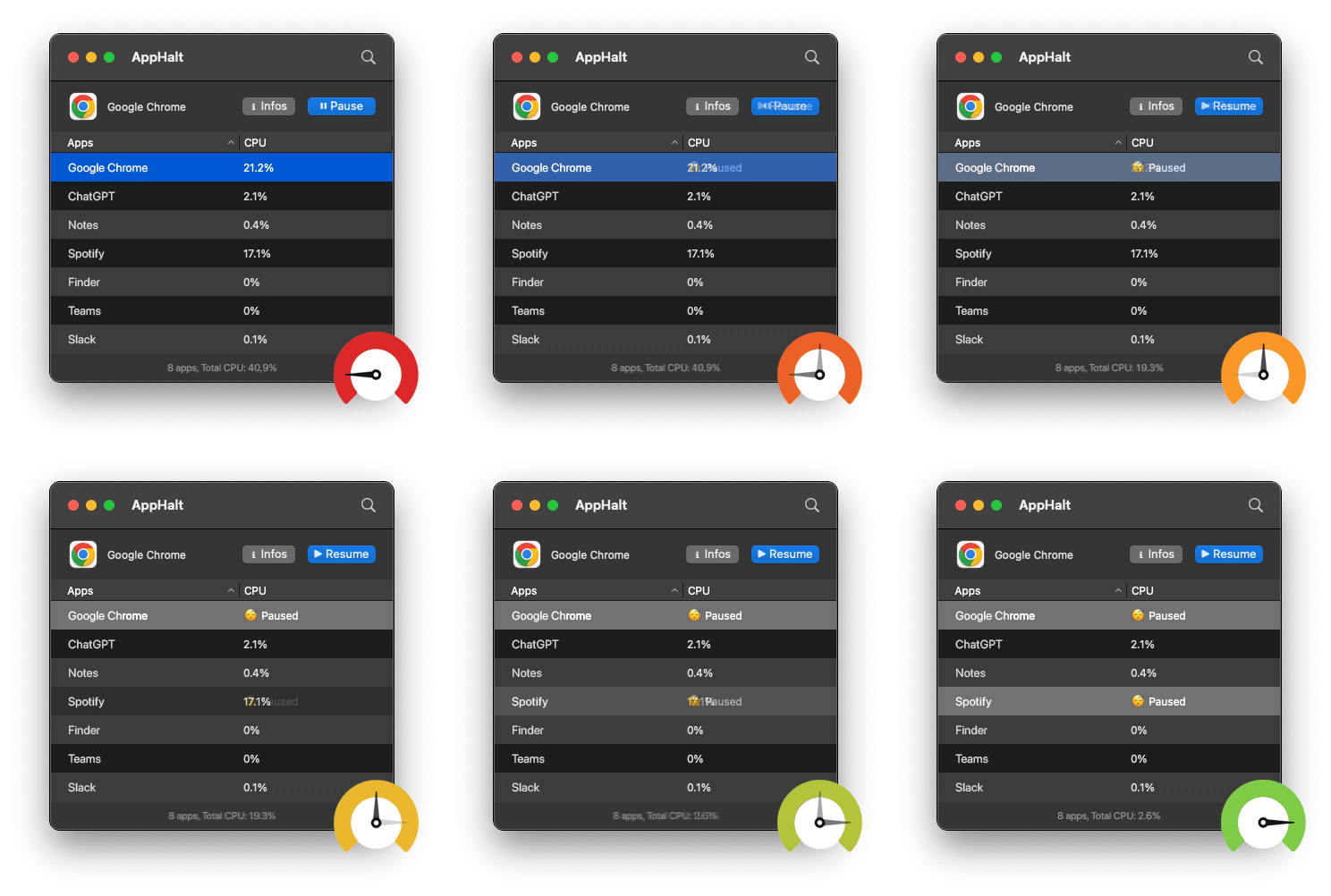
AppHalt gives you a cleaner way to test: pause unused apps, reduce background CPU activity, and let your Mac focus on fewer active tasks.
Use AppHalt when:
- macOS 27 beta drains battery faster than expected.
- Your MacBook gets warm during light use.
- Activity Monitor shows apps using energy in the background.
- You want to keep apps open but inactive.
- You want to reduce background CPU usage without quitting your whole workspace.
- You want to test whether fewer active apps improve battery life.
AppHalt does not repair your battery. It does not fix every beta bug. Its role is practical: it helps reduce unnecessary background app activity, which can help your MacBook use less power while you test macOS 27 beta.
Do not pause apps that are saving, syncing important files, uploading, downloading, rendering, recording, exporting, compiling, or handling live work.
7. Review Login Items and Background Items
After installing macOS 27 beta, startup clutter can make battery drain worse.
Apps that open automatically may begin syncing, checking, refreshing, and updating before you even start working.
To review them:
- Open System Settings.
- Go to General.
- Open Login Items & Extensions or Login Items.
- Remove apps that do not need to open automatically.
- Review background items carefully.
Good candidates to remove from startup:
- Old utilities.
- Chat apps you do not need immediately.
- Video call apps.
- Media apps.
- Launchers.
- Duplicate menu bar tools.
- Trial apps.
Be careful with password managers, VPNs, security software, backup tools, cloud sync tools, and hardware drivers.
A cleaner startup helps your MacBook start the day with less background battery drain.
8. Stop cloud sync from draining battery
Cloud sync is useful, but it can drain battery after a beta update.
Common sync sources include:
- iCloud Drive.
- iCloud Photos.
- Dropbox.
- Google Drive.
- OneDrive.
- Backup tools.
- Project sync apps.
After installing macOS 27 beta, these tools may scan files, compare folders, upload changes, download data, or rebuild indexes.
If sync is important, let it finish while plugged in. If it is not urgent, pause it inside the sync app.
Do not force quit cloud sync while important files are actively moving unless you understand the risk.
9. Check if an app is preventing sleep
If your MacBook battery drains while sleeping after installing macOS 27 beta, check whether an app is preventing sleep.
Open Activity Monitor, go to the Energy tab, and look for the Preventing Sleep column.
Apps may prevent sleep during legitimate work:
- Downloads.
- Uploads.
- Backups.
- Video playback.
- Screen sharing.
- Remote access.
But it becomes suspicious when:
- The app is idle.
- The task ended hours ago.
- Battery drains overnight.
- The same app prevents sleep every day.
- The behavior started only after the beta update.
If an app prevents sleep without a clear reason, update it, quit it, or check its preferences.
10. Enable Low Power Mode when testing on battery
Low Power Mode can help when you need your MacBook to last longer while testing macOS 27 beta.
Use it when:
- You are away from your charger.
- You are traveling.
- You are taking notes.
- You are browsing lightly.
- You want to reduce energy use during beta testing.
Low Power Mode will not cancel out heavy browser sessions, video calls, cloud sync, or beta bugs. But it helps when your workload is already reasonable.
Combine it with lower brightness, fewer tabs, fewer background apps, and fewer peripherals for better results.
11. Disconnect accessories when using battery
External accessories can increase battery drain, especially during beta testing.
Check whether you really need:
- USB-C hubs.
- External drives.
- External displays.
- Audio interfaces.
- Webcams.
- Adapters.
- Card readers.
- Docking stations.
If you are using your MacBook on battery, disconnect what you do not need.
If battery drain appears only when one accessory is connected, test a different cable, port, adapter, or hub.
12. Update apps after installing macOS 27 beta
Apps may need updates to behave properly on macOS 27 beta.
Prioritize updates for:
- Browsers.
- Cloud sync apps.
- Video call apps.
- Creative apps.
- Developer tools.
- VPN apps.
- Security tools.
- Menu bar utilities.
- Audio, display, printer, or scanner utilities.
If one app drains battery badly after the beta, check whether the developer has released a beta-compatible update.
If not, use the app less, quit it when not needed, or report the issue.
13. When macOS 27 beta battery drain is a real problem
Some battery drain after a beta update is normal. But not all of it should be ignored.
Take it seriously if:
- Battery life stays poor after several days.
- The MacBook gets hot with no apps open.
- Activity Monitor shows one app using energy constantly.
- Battery drains heavily overnight.
- The Mac loses battery while sleeping.
- Fans run loudly during light tasks.
- The Mac becomes unreliable for your normal work.
At that point, consider reporting the issue through Feedback Assistant, waiting for the next beta build, or restoring to a stable macOS version if the Mac is important for daily work.
Best order to fix macOS 27 beta battery drain
Follow this order for the safest results:
- Plug in your MacBook and let post-update tasks finish.
- Restart after the first setup period.
- Open Activity Monitor and check the Energy tab.
- Find apps using significant energy.
- Close browser tabs and remove unused extensions.
- Pause unused apps with AppHalt.
- Pause nonessential cloud sync.
- Review Login Items and Background Items.
- Check Preventing Sleep if battery drains overnight.
- Enable Low Power Mode when working on battery.
- Disconnect peripherals you do not need.
- Update apps that drain battery after the beta.
- Report repeatable beta issues with Feedback Assistant.
Common mistakes after macOS 27 beta battery drain
Mistake 1: Assuming the battery is damaged
Fast drain after a beta update is often caused by software activity, not battery failure. Check apps and background processes first.
Mistake 2: Judging battery life too early
The first few hours after installing a beta can be misleading because macOS may still be indexing and syncing.
Mistake 3: Leaving every app open after updating
Reopening your full workspace immediately makes it hard to know whether the beta or your apps are causing battery drain.
Mistake 4: Ignoring browser tabs
Browsers can be one of the biggest battery drains on a MacBook, especially after restoring a large session.
Mistake 5: Force quitting sync apps
Force quitting cloud sync can interrupt files. Pause sync properly when possible.
Mistake 6: Keeping the beta on a critical Mac
If your MacBook is essential for work or school, beta battery drain may not be worth the risk.
FAQ: macOS 27 beta battery drain
Why is macOS 27 beta draining my MacBook battery?
macOS 27 beta may drain battery because of indexing, iCloud sync, Photos analysis, app compatibility issues, background processes, browser tabs, login items, or beta-level energy bugs.
Is battery drain normal after installing macOS 27 beta?
Some battery drain is normal during the first hours after installation. Your Mac may be doing post-update work. If it remains bad after several days, investigate apps and background activity.
How do I fix macOS 27 beta battery drain?
Check Activity Monitor’s Energy tab, close browser tabs, pause unused apps, stop unnecessary cloud sync, review Login Items, lower brightness, enable Low Power Mode, and update apps.
Can AppHalt help with macOS 27 beta battery drain?
AppHalt can help reduce unnecessary background CPU usage by pausing unused apps. It does not fix beta bugs, but it can help your MacBook spend less energy on apps you are not using.
Why is my MacBook hot after installing macOS 27 beta?
Heat can come from indexing, syncing, high CPU usage, app updates, cloud activity, or apps not optimized for the beta. Check Activity Monitor before assuming hardware damage.
Why does my MacBook battery drain overnight on macOS 27 beta?
Overnight battery drain can come from apps preventing sleep, cloud sync, wake activity, browser processes, external accessories, or beta sleep bugs. Check Activity Monitor’s Preventing Sleep column.
Should I enable Low Power Mode on macOS 27 beta?
Yes, if you need longer battery life while testing the beta. It works best with lower brightness, fewer tabs, fewer background apps, and fewer accessories.
Should I downgrade if macOS 27 beta battery life is bad?
If battery drain makes your Mac unreliable for work, school, or travel, consider restoring to a stable macOS version from backup. Beta software is not ideal for every main Mac.
How long should I wait before judging macOS 27 beta battery life?
Wait several hours at minimum, and ideally a full day or two of normal use. If battery drain remains severe after background tasks settle, investigate further.
Can browser tabs cause macOS 27 beta battery drain?
Yes. Browser tabs, extensions, videos, web apps, and restored sessions can use significant energy and make battery drain look worse after a beta update.
Can cloud sync drain battery after macOS 27 beta?
Yes. iCloud Drive, Photos, Dropbox, Google Drive, OneDrive, and backup tools can drain battery while syncing, scanning, uploading, or downloading files.
Is macOS 27 beta safe for my main MacBook?
Only if you can tolerate bugs, battery drain, app compatibility issues, and troubleshooting. If battery reliability matters, waiting for a later beta or stable release is safer.
Useful official Apple resources
If you want to go deeper, these Apple resources are useful:
- Apple Developer Software Releases
- Apple Beta Software Program
- macOS 27 Golden Gate Preview
- View energy consumption in Activity Monitor on Mac
- View CPU activity in Activity Monitor on Mac
Final thoughts: battery drain after macOS 27 beta needs evidence, not panic
macOS 27 beta battery drain can be frustrating, especially if your MacBook used to last much longer before the update.
But the right reaction is not panic. Start with evidence.
Let indexing finish. Check Activity Monitor. Look at Energy Impact, 12 hr Power, and Preventing Sleep. Close browser tabs. Pause unused apps. Stop unnecessary cloud sync. Review Login Items. Enable Low Power Mode when needed. Update apps that are not ready for the beta.
Some battery drain is part of testing beta software. Some battery drain comes from apps. Some comes from background tasks. Some may be a real beta bug.
The cleaner your MacBook workload is, the easier it becomes to know what is actually causing the problem.
🚀 Reduce macOS 27 Beta Battery Drain with AppHalt
AppHalt helps your MacBook stop wasting battery on apps you are not using while testing macOS 27 beta.
Instead of quitting your whole workspace or letting every app keep running in the background, AppHalt gives you a smarter middle ground: pause unused apps, reduce background CPU usage, and help your MacBook stay lighter on battery.
✅ Reduce background CPU usage.
✅ Help prevent overheating, fan noise, and battery drain.
✅ Pause unused apps without fully breaking your workflow.
✅ Keep your Mac feeling faster, lighter, and calmer.
📥 Testing macOS 27 beta on battery? Download AppHalt now.