
1. Mac Slow When Using AirPlay? You’re Not the Only One 📡
If your Mac is slow when using AirPlay, whether you’re streaming to an Apple TV or mirroring your screen to another Mac or Smart TV, you’ve probably experienced lag, stuttering, or audio desync. While AirPlay is a powerful feature, it requires real-time encoding, wireless bandwidth, and system resources—all at once.
2. Why AirPlay Slows Down macOS
When you activate AirPlay, your Mac:
- Uses CPU to encode video in real time
- Engages the GPU for rendering (especially in full-screen or HD)
- Increases memory usage for screen mirroring
- Uses Wi-Fi bandwidth constantly
If other apps are running in the background (Zoom, Slack, Chrome…), your Mac becomes slow when using AirPlay.

3. How to Identify What’s Dragging You Down
While using AirPlay:
- Open Activity Monitor → sort by CPU or Energy
- Look for apps using over 10% CPU
- Watch for browser processes, video editors, cloud services
It’s ideal for presentations, entertainment, or remote teaching sessions.

5. Bonus Tips for Smooth AirPlay Performance
- Close unnecessary apps before enabling AirPlay
- Prefer 5 GHz Wi-Fi over 2.4 GHz
- Use Safari instead of Chrome for video content
- Disable Bluetooth if you’re not using it (frees up bandwidth)
Apple’s Official Advice on AirPlay
Check Apple’s guide: How to use AirPlay on your Mac
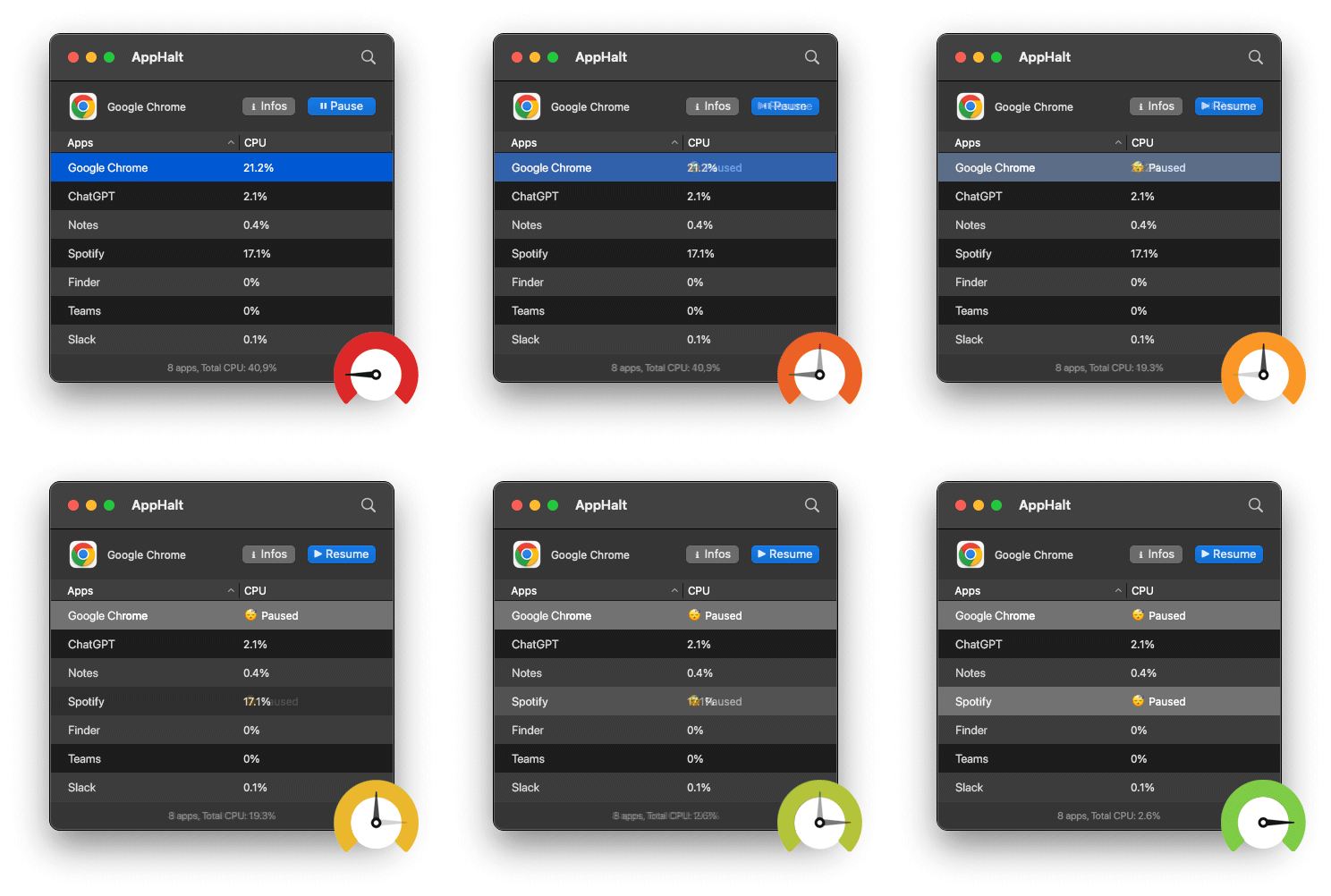
- ✅ Pause background apps before or during AirPlay
- ✅ Maximize CPU and GPU for streaming only
- ✅ Keep performance high even while wireless
Where AppHalt may help
If Activity Monitor shows a regular app you recognise using resources while you do not need it, AppHalt gives you a reversible option: pause that selected app without quitting it, then resume it later. AppHalt does not repair macOS or guarantee a speed, temperature, battery, or stability result; the effect depends on what the app was doing.
Do not pause an app that is uploading, syncing, backing up, rendering, recording, playing media, or handling a call you need to continue.