1. Mac Slow When Switching User Accounts? Here’s Why 🐢
If your Mac is slow when switching user accounts, it’s usually because both sessions stay active in the background. This means your Mac must manage two (or more) sets of apps, windows, and processes—all at once. It’s like running two computers on one battery.
2. Why User Switching Affects Performance
When switching accounts, macOS doesn’t close the first session. Instead, it:
- Keeps apps from the first user running in the background
- Maintains RAM allocation for both desktops
- Continues syncing processes (iCloud, Dropbox, Photos…)
- Loads all login items for the second user
All this can cause your Mac to slow down when switching user accounts—especially on machines with 8GB RAM or less.

This is ideal for shared Macs at home, work, or school.

4. Other Tips to Improve Account Switching Speed
- Log out of unused sessions when possible
- Limit heavy apps (Photoshop, Zoom…) to one account at a time
- Disable auto-launch login items for secondary users
- Restart your Mac regularly to clear RAM leaks
Apple’s Guidance on Multi-User Mac Usage
Helpful article: Set up multiple users on your Mac – Apple Support
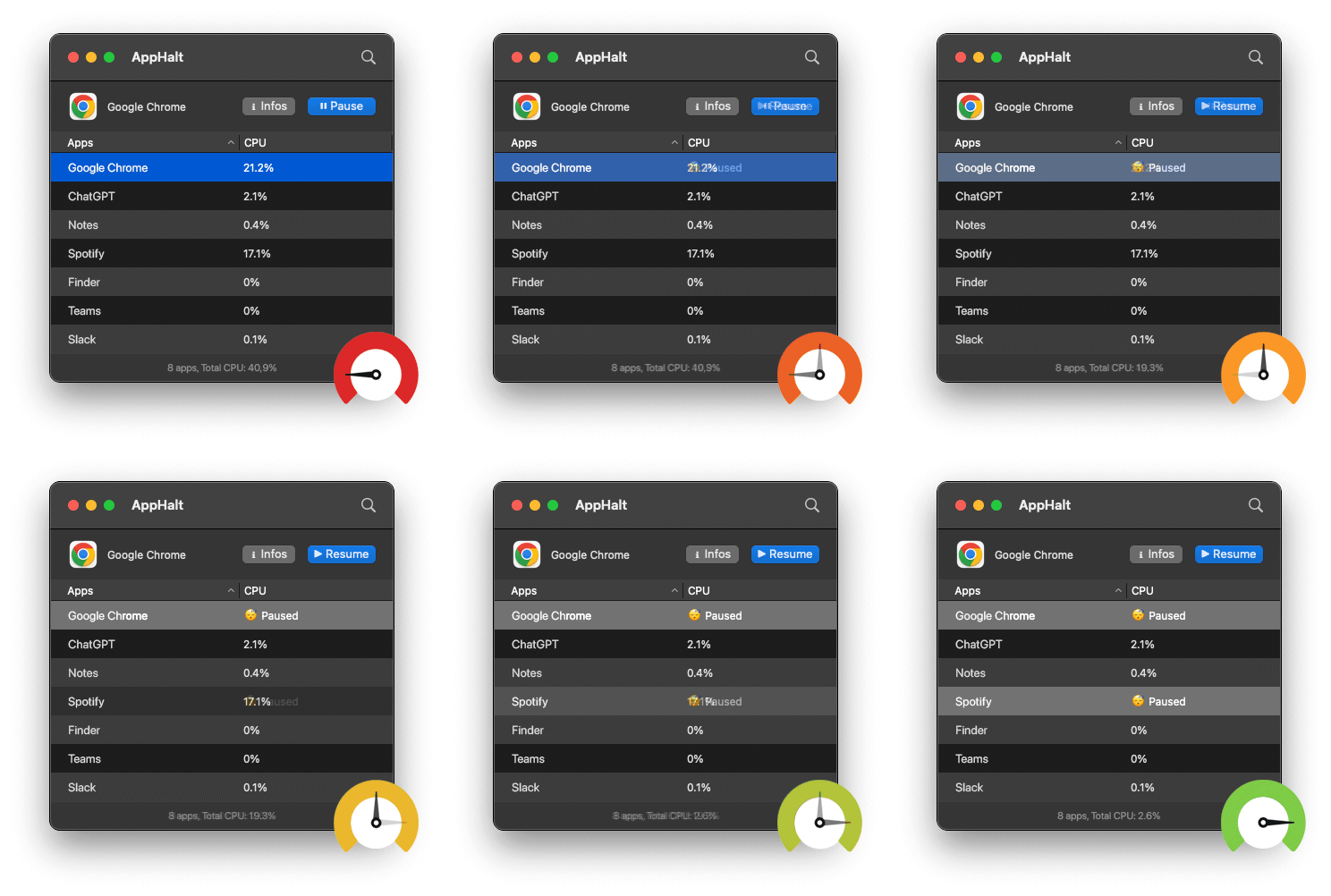
- ✅ Pause background apps before switching accounts
- ✅ Reduce lag caused by multitasking sessions
- ✅ Free up RAM instantly between users
Where AppHalt may help
If Activity Monitor shows a regular app you recognise using resources while you do not need it, AppHalt gives you a reversible option: pause that selected app without quitting it, then resume it later. AppHalt does not repair macOS or guarantee a speed, temperature, battery, or stability result; the effect depends on what the app was doing.
Do not pause an app that is uploading, syncing, backing up, rendering, recording, playing media, or handling a call you need to continue.