
If your MacBook is slow after sleep, you’re not alone. Many users notice sluggish performance, spinning beachballs, or laggy apps after waking their Mac. But why does this happen—and how can you fix it for good?
Common Causes of a Slow Mac After Sleep
When your Mac goes to sleep, it saves energy by putting hardware components into a low-power state. But waking up smoothly requires fast reconnections between CPU, memory, disk, and background apps. If one of those fails, performance issues arise.
1. Resource-Heavy Background Apps
Apps like Dropbox, Adobe Creative Cloud, and browser tabs often restart sync or refresh processes after sleep. These background activities may max out your CPU, leading to a noticeable lag.
2. System Services Reinitializing
macOS reinitializes key services like Spotlight, Time Machine, and iCloud during wake-up. If your Mac is older or lacks SSD storage, this can feel painfully slow.
3. Memory Swap and RAM Pressure
If your RAM was full before sleep, your Mac might have swapped memory to disk. Waking up then requires slow disk reads to restore that data—especially if many tabs or apps were open.
4. Bluetooth, Wi-Fi or Peripheral Delays
Laggy performance may be due to peripherals like keyboards or external drives reconnecting. Bluetooth and network handshakes can also delay responsiveness.
How to Fix a MacBook That’s Slow After Sleep
✅ Step 1: Check Activity Monitor
Open Activity Monitor after waking your Mac. Click the CPU tab and sort by “% CPU” to find which processes are hogging resources. You might find Dropbox, Spotlight, or a browser with high usage.
✅ Step 3: Reset SMC and NVRAM
For older Intel Macs, resetting the SMC (System Management Controller) and NVRAM can resolve sleep-related issues. Follow Apple’s official instructions to perform the reset safely.
✅ Step 4: Disable Unused Login Items
Go to System Settings → General → Login Items and remove apps you don’t need to auto-launch. Many of them keep running or relaunch after sleep and slow down performance.
✅ Step 5: Install Updates
macOS updates often include fixes for sleep/wake bugs. Always keep your system up to date from System Settings → General → Software Update.
Prevent MacBook Sleep Lag with Smart App Management
It’s especially useful for apps like Zoom, Microsoft Teams, Slack, and Chrome that often resume background activity the moment your Mac wakes up.

Conclusion: Stop Waking Up to a Sluggish Mac
Take control of your Mac’s performance—especially during wake-up cycles—and experience the speed your machine is truly capable of.
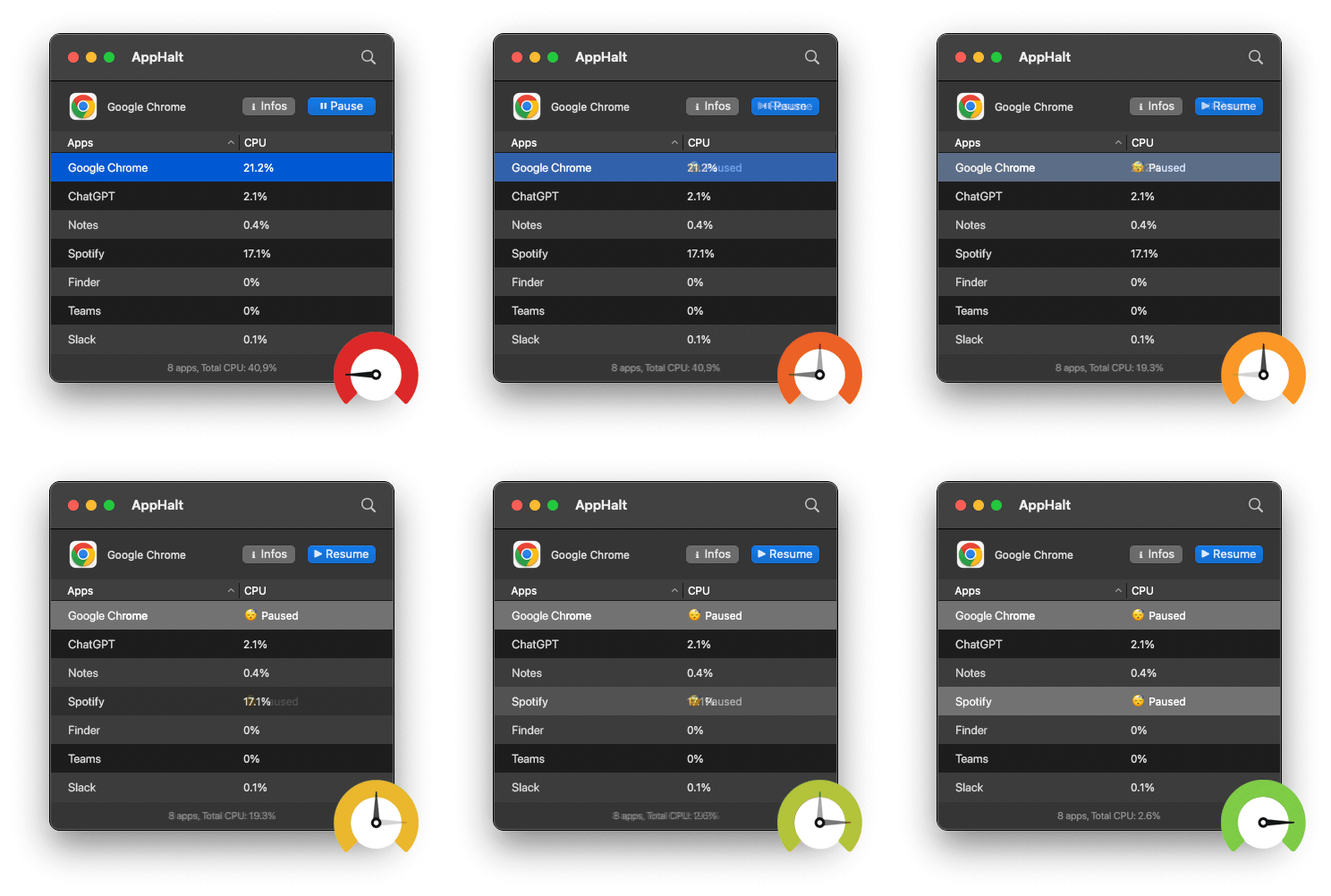
- ✅ Reduce background power consumption.
- ✅ Prevent overheating and excessive battery wear.
- ✅ Extend your Mac’s battery life instantly.
Where AppHalt may help
If Activity Monitor shows a regular app you recognise using resources while you do not need it, AppHalt gives you a reversible option: pause that selected app without quitting it, then resume it later. AppHalt does not repair macOS or guarantee a speed, temperature, battery, or stability result; the effect depends on what the app was doing.
Do not pause an app that is uploading, syncing, backing up, rendering, recording, playing media, or handling a call you need to continue.