Is your Mac overheating after just a few minutes of use? Fans spinning like a jet engine? MacBook hot to the touch even when idle? Overheating can be more than annoying—it can damage your battery, reduce performance, and even shorten the lifespan of your Mac.
Luckily, most overheating issues on macOS can be traced to a few common causes—and fixed easily with the right approach.
Why Is Your Mac Overheating?
1. Background Apps Consuming CPU
One of the most common culprits behind overheating is unnecessary apps running in the background. Some apps, like Chrome, Zoom, or Dropbox, can consume high CPU even when you’re not using them. This constant activity heats up your processor.

2. Poor Ventilation or Dust
If your Mac’s vents are blocked (like using it on a bed or couch), the internal heat has nowhere to escape. Combine that with dust buildup over time, and your Mac can feel like it’s ready to fry an egg.
3. High Ambient Temperature
Using your Mac in a hot environment (above 30°C / 86°F) can naturally cause thermal throttling. macOS will try to cool itself by reducing performance, which you may feel as lag or fan noise.
4. Browser Tabs and Video Streaming
Streaming video in 4K or keeping 20+ tabs open in Safari, Chrome, or Firefox can put heavy load on your Mac’s GPU and RAM, causing both heat and sluggishness.
How to Prevent Your Mac from Overheating
✅ Step 1: Monitor CPU Usage with Activity Monitor
Open Activity Monitor and check the CPU tab. Apps with high percentages (50%+) should be closed if not in use. Look for Safari, kernel_task, or cloud-based services that often spike unexpectedly.
✅ Step 3: Keep Vents Clear and Clean
Always place your Mac on a hard surface. Avoid pillows, blankets, or laps when using it. Consider buying a cooling stand or lifting pad for better airflow.
✅ Step 4: Clean Your Mac Internally
If you’re confident opening your Mac (or you can go to an Apple-certified technician), cleaning the fan and internal vents from dust can drastically improve cooling.
✅ Step 5: Update Your macOS
Apple regularly patches thermal and power management issues in macOS. Make sure you’re running the latest update from Apple Support.
Bonus Tip: Disable Unused Login Items
Go to System Settings → General → Login Items and remove any apps you don’t want to auto-launch. These can run in the background and contribute to CPU usage right after boot.
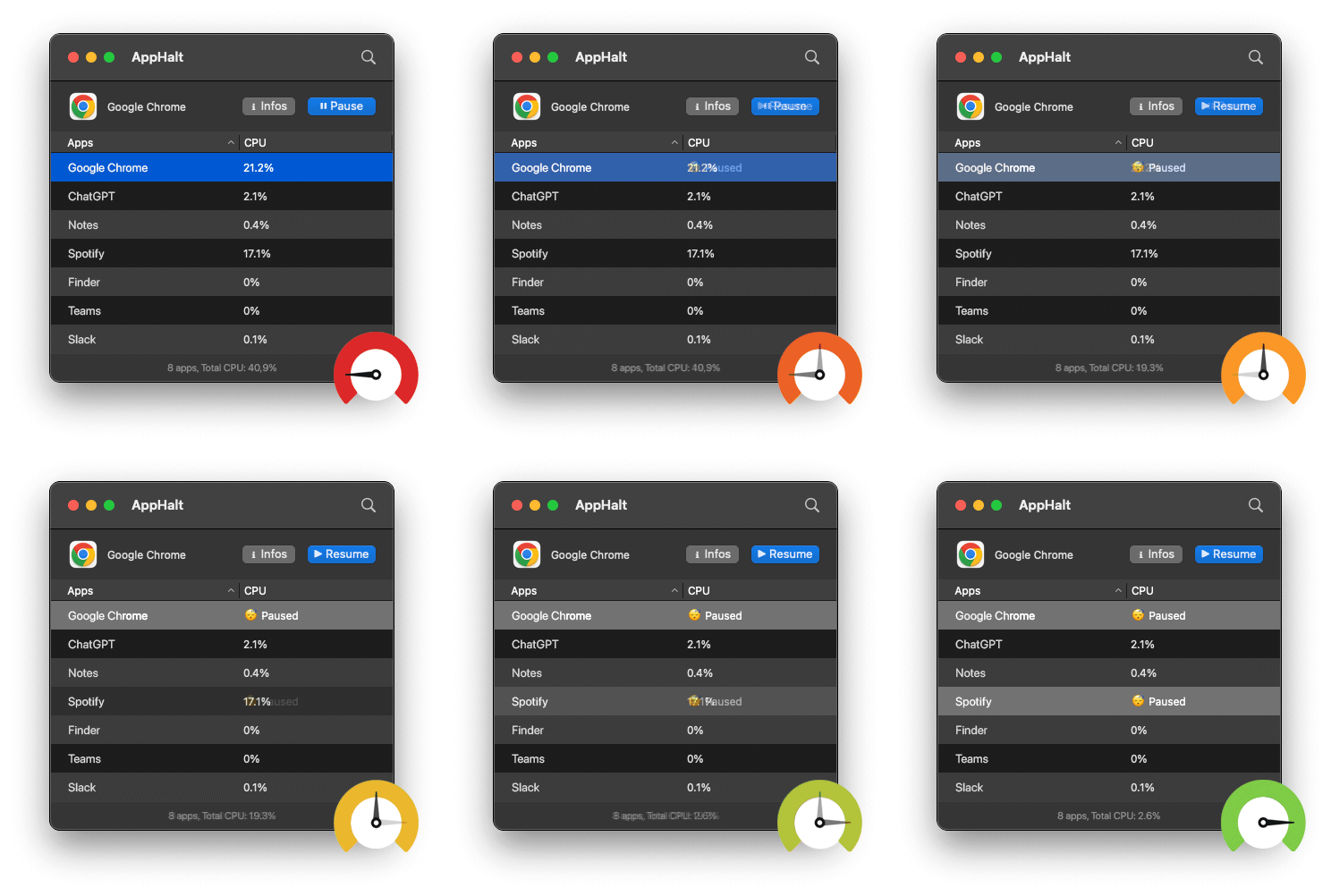
This means you can resume your apps later without losing your session, all while preventing overheating and unnecessary battery drain.
Conclusion: Say Goodbye to Overheating Macs
Keep your machine fast, cool, and reliable—even on hot days or during long work sessions.
- ✅ Keep your Mac cool and silent
- ✅ Extend battery health and lifespan
- ✅ Optimize performance in just one click
Where AppHalt may help
If Activity Monitor shows a regular app you recognise using resources while you do not need it, AppHalt gives you a reversible option: pause that selected app without quitting it, then resume it later. AppHalt does not repair macOS or guarantee a speed, temperature, battery, or stability result; the effect depends on what the app was doing.
Do not pause an app that is uploading, syncing, backing up, rendering, recording, playing media, or handling a call you need to continue.