
Mac Overheating After macOS Update? Here’s How to Fix It
Just updated your Mac and now it’s hotter than ever? You’re not imagining it. After each macOS upgrade—especially major ones like macOS Tahoe—it’s common for Macs to overheat. Fans spin loudly, your MacBook warms up like a toaster, and battery life plummets.
Let’s explore why your Mac is overheating after a macOS update and what you can do to cool it down—without disabling core features or reinstalling everything.
Why Does macOS Trigger Overheating?
1. Background Reindexing & Sync
After every major update, macOS reindexes Spotlight, Photos, Mail, and iCloud Drive in the background. This can take hours—or even days—using high CPU and disk I/O, which heats your Mac.
2. Unoptimized or Old Apps
Apps that haven’t been updated for the latest macOS version can behave poorly. They may crash silently or use excessive CPU trying to stay compatible.

3. New Visual & AI Features
macOS Tahoe introduced dynamic visuals, smarter widgets, and AI enhancements that run in the background. All these features, while useful, constantly ping your processor—and that means heat.
4. Spotlight, Siri, iCloud… All At Once
After an update, macOS tends to relaunch multiple services at the same time. Siri learning patterns, Safari syncing tabs, iCloud syncing every device—you get the idea. It’s a performance storm.
How to Cool Down Your Mac After a macOS Update
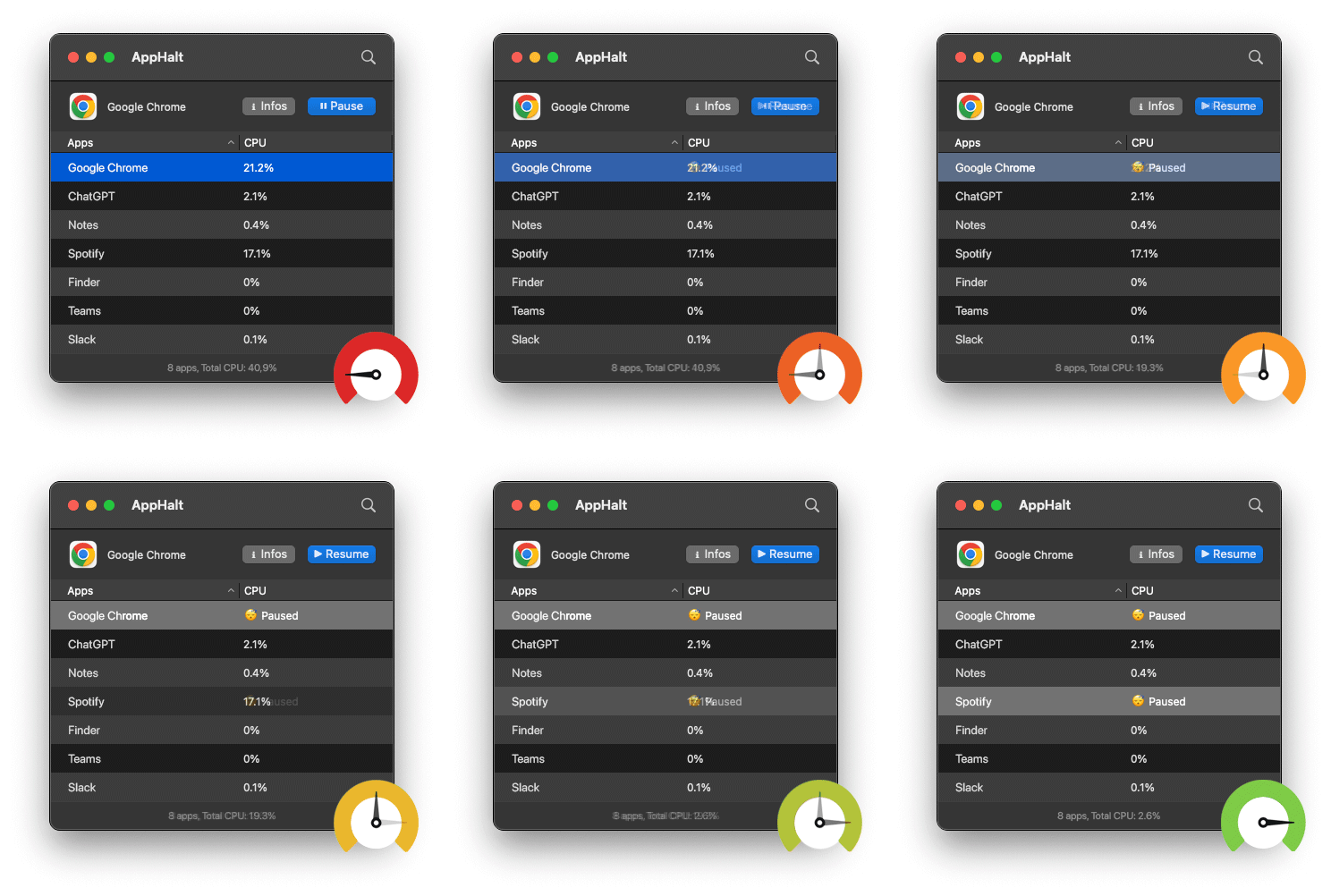
Apps like Adobe Creative Cloud, Dropbox, Spotify, or Microsoft Teams often run in the background—even when idle—and consume CPU. Pausing them frees up system resources and instantly cools down your Mac.
✅ Step 2: Check Activity Monitor
✅ Step 3: Disable Unnecessary Login Items
Go to System Settings → General → Login Items. Remove anything that doesn’t need to launch at startup. Fewer apps at launch = less CPU = less heat.

✅ Step 4: Use Low Power Mode (M1/M2/M3 Macs)
Newer Macs offer a Low Power Mode. Enable it via System Settings → Battery. It reduces peak performance, slows background activity, and helps keep temperature under control during light usage.
✅ Step 5: Restart Regularly Post-Update
After updates, memory leaks and excessive processes often linger. Restarting your Mac daily for the first few days after a system upgrade helps stabilize temperatures.
- ✅ Works silently in the background
- ✅ Auto-Pause for automatic control
- ✅ Improves thermal performance and battery life
Conclusion: Bring the Heat Down
If your Mac overheats after a macOS update, don’t panic. It’s normal—but not permanent. With the right tools and settings, you can cool things down quickly and get back to a smooth experience.
🔥 Mac too hot to handle?
- ✅ Pause apps
- ✅ Reduce heat
- ✅ Extend battery life
Where AppHalt may help
If Activity Monitor shows a regular app you recognise using resources while you do not need it, AppHalt gives you a reversible option: pause that selected app without quitting it, then resume it later. AppHalt does not repair macOS or guarantee a speed, temperature, battery, or stability result; the effect depends on what the app was doing.
Do not pause an app that is uploading, syncing, backing up, rendering, recording, playing media, or handling a call you need to continue.