1. Noticed That Your Mac Gets Hot When Charging? 😓
If your Mac gets hot when charging, you’re not alone. Many MacBook users report warmth—sometimes excessive heat—around the keyboard or under the device during charging. But is it normal? And more importantly, how can you prevent it from affecting your performance and battery life?
2. Why Does a Mac Get Hot During Charging? 🔌
Your Mac draws more power when it’s doing two things at once: charging the battery and handling tasks (like browsing, editing, or even syncing with iCloud). The charger feeds energy into the battery, and that process generates heat.
Combine that with active apps or poor airflow, and your Mac can get uncomfortable—sometimes worryingly so.
3. High CPU Load = High Temperature 🔥
When your Mac is charging and also running several background processes (Dropbox syncing, browser tabs open, Xcode compiling…), the CPU is working overtime. This combination makes it harder for macOS to keep things cool.
4. Prevent Your Mac From Overheating While Plugged In
Here are a few practical things you can do if your Mac gets hot when charging:
- Close heavy apps before plugging in
- Pause background processes that sync or index data
- Charge in a cool, well-ventilated area (not on a bed or couch)
- Unplug when the battery is full—especially if you’re still working
6. Keep Your macOS Up to Date 🧩
Apple regularly releases updates that include better thermal management and battery optimization. Go to System Settings → General → Software Update to ensure your Mac is running the latest version of macOS.

7. Avoid Charging While Multitasking Intensively
Try to avoid charging your Mac while rendering video, gaming, or doing intensive tasks like data crunching. If possible, charge your device while it’s idle or only performing light tasks like email or reading.
Apple’s Official Guidance on Temperature
Apple recommends keeping your Mac in ambient temperatures between 50° and 95° F (10° to 35° C). See more at Apple: Operating Temperatures.
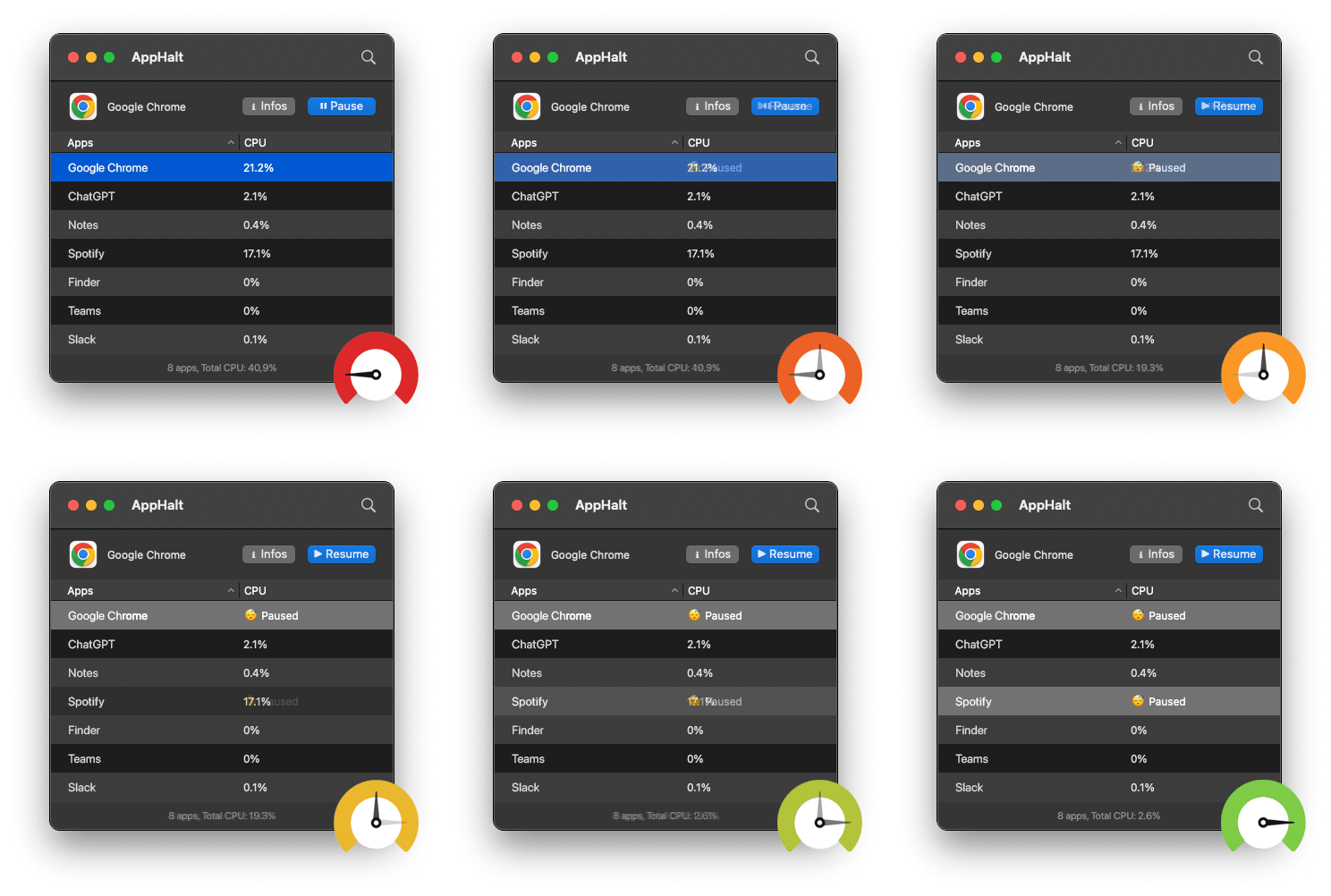
- ✅ Pause non-essential apps in one click
- ✅ Reduce CPU and fan usage during charging
- ✅ Protect your battery and keep performance smooth
Charging heat: what is normal and what is not
It is common for a MacBook to feel warmer while fast charging, running a demanding app, updating macOS, or driving an external display. The useful test is whether it cools down after the workload ends. If it does, charging is adding heat but is not necessarily the root cause. If it remains hot at idle, look for an app or background process using CPU, then compare the behaviour on battery and on the charger.
Use the supplied or a reputable USB-C power adapter and cable, keep vents clear, and avoid soft surfaces while charging. Disconnect non-essential hubs or displays for one test: a hub can add both power and graphics workload. Do not try to cool the Mac abruptly or cover it; airflow is the safe intervention.
Get help for these signs
Stop charging and arrange service if the battery appears swollen, the Mac shuts down with a temperature warning, charging cuts in and out, or the fan makes grinding noise. Those are hardware symptoms, not an app-management issue.
Where AppHalt may help
If Activity Monitor shows a regular app you recognise using resources while you do not need it, AppHalt gives you a reversible option: pause that selected app without quitting it, then resume it later. AppHalt does not repair macOS or guarantee a speed, temperature, battery, or stability result; the effect depends on what the app was doing.
Do not pause an app that is uploading, syncing, backing up, rendering, recording, playing media, or handling a call you need to continue.