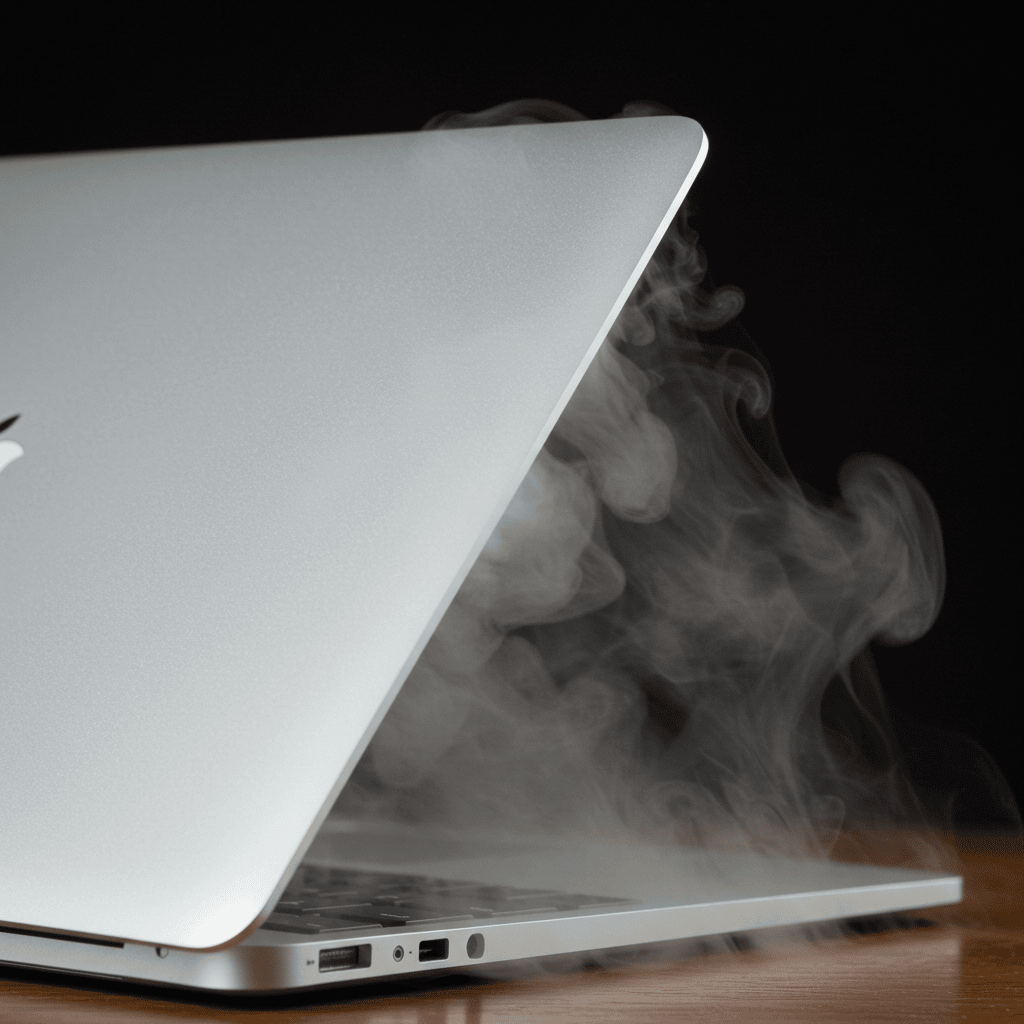
1. MacBook Pro Heats Up When Closed? That’s a Warning Sign 🔥
If your MacBook Pro heats up when closed, it’s not normal—and it’s not safe either. Whether you’ve closed the lid to put it to sleep or you’re using clamshell mode with an external display, heat build-up behind a closed lid can damage internal components over time.
Let’s explore why this happens and how to cool things down before it’s too late.
2. Why Your MacBook Overheats in Sleep or Clamshell Mode
macOS doesn’t always stop all processes when the lid is closed. In fact, depending on your system settings and connected peripherals, your MacBook may continue:
- Running background sync (Dropbox, iCloud Drive, etc.)
- Indexing files with Spotlight
- Keeping Bluetooth or networking active
- Operating in clamshell mode with an external display
If vents are blocked while the lid is shut, heat can’t escape—and your MacBook becomes a mini oven.
3. Check App Activity After Closing the Lid
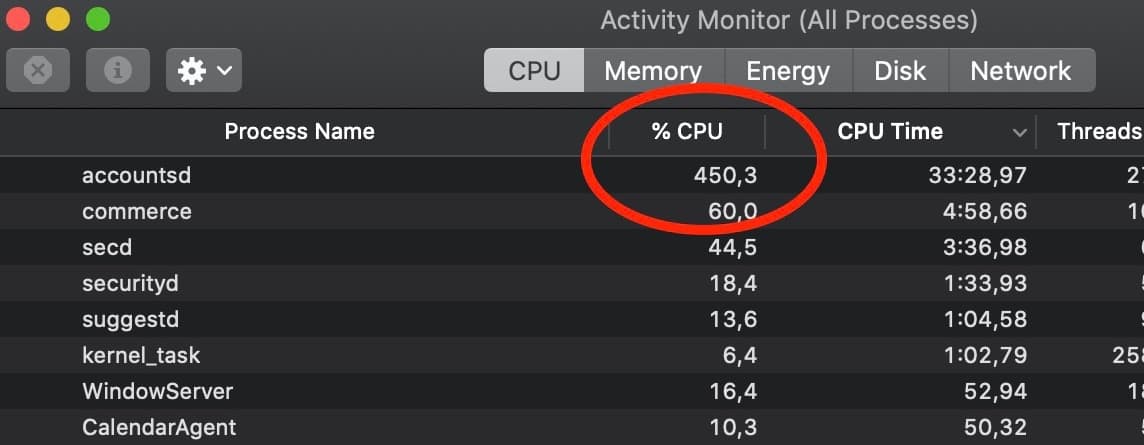
To confirm what’s happening, leave Activity Monitor open before sleep, then wake your Mac and check the “CPU” and “Energy” tabs. You’ll often see apps like Photos, Slack, Dropbox or even Spotlight running at full throttle during sleep or screen-off periods.

This is especially useful for heavy apps you want to keep open (like Final Cut Pro, Chrome, or development tools), but don’t want active while the screen is off.
5. Other Tips to Prevent MacBook Heat While Closed
- Ensure your MacBook is placed on a flat, ventilated surface
- Avoid charging overnight in clamshell mode
- Use external monitors that don’t force GPU overload
- Turn off Power Nap and automatic sync during sleep
Still Hot? Read Apple’s Official Guide
Apple offers tips for safe temperatures and battery settings here: Apple: Operating Temperatures
🚀 Keep Your MacBook Cool, Even When Closed
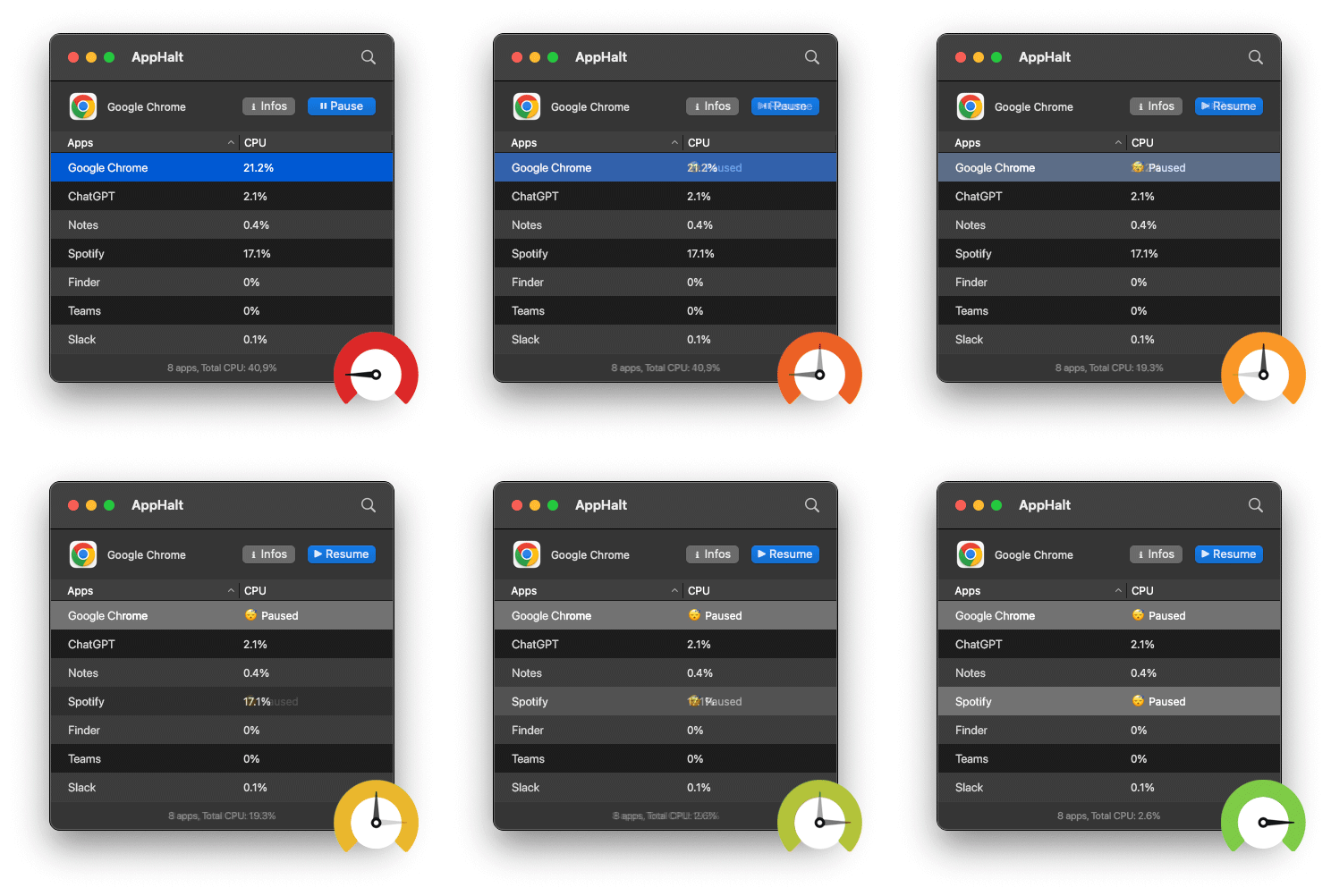
- ✅ Pause heavy apps before closing your lid
- ✅ Avoid overheating during sleep or screen-off use
- ✅ Keep your MacBook safe, cool, and energy-efficient
A closed MacBook should normally be cool and asleep
When a MacBook becomes hot inside a bag or on a desk with the lid closed, the important question is whether it actually went to sleep. A background task, a connected accessory, network activity, or a wake event can keep it working with little airflow. That turns a normal workload into a heat problem because the closed lid traps warmth.
Start by disconnecting non-essential hubs, external drives, displays, and USB devices before closing the lid for a short test. Then reopen the Mac and check which apps were active in Activity Monitor. If the issue appears after a particular app, browser tab, sync client, or meeting tool was running, quit it before sleep and test again. Also review Login Items and background permissions: a utility that repeatedly wakes or syncs can be the cause even when no window is open.
Check sleep settings before resetting anything
Power Nap and network access while asleep can be useful, but they are worth disabling temporarily while you isolate the problem. Avoid changing several power settings at once; make one change, close the lid for ten minutes, and compare the result. If the MacBook is hot after being closed in a bag, let it cool on a hard surface before charging.
Signs that need service
A swollen battery, persistent heat with no measurable activity, repeated unexpected wake-ups after a clean restart, or a shutdown warning are reasons to contact Apple or an authorised service provider. Those are not symptoms to solve by forcing apps closed indefinitely.
Where AppHalt may help
If Activity Monitor shows a regular app you recognise using resources while you do not need it, AppHalt gives you a reversible option: pause that selected app without quitting it, then resume it later. AppHalt does not repair macOS or guarantee a speed, temperature, battery, or stability result; the effect depends on what the app was doing.
Do not pause an app that is uploading, syncing, backing up, rendering, recording, playing media, or handling a call you need to continue.