1. Why Is Your Mac Fan Always On? 🌪️
If your Mac fan is always on, it usually means your system is overheating or working harder than usual. This can be caused by high CPU usage, poor airflow, or even dust inside the machine. It’s important to find the root cause before permanent damage occurs.
2. Use Activity Monitor to Identify Fan-Triggering Apps 🛠️
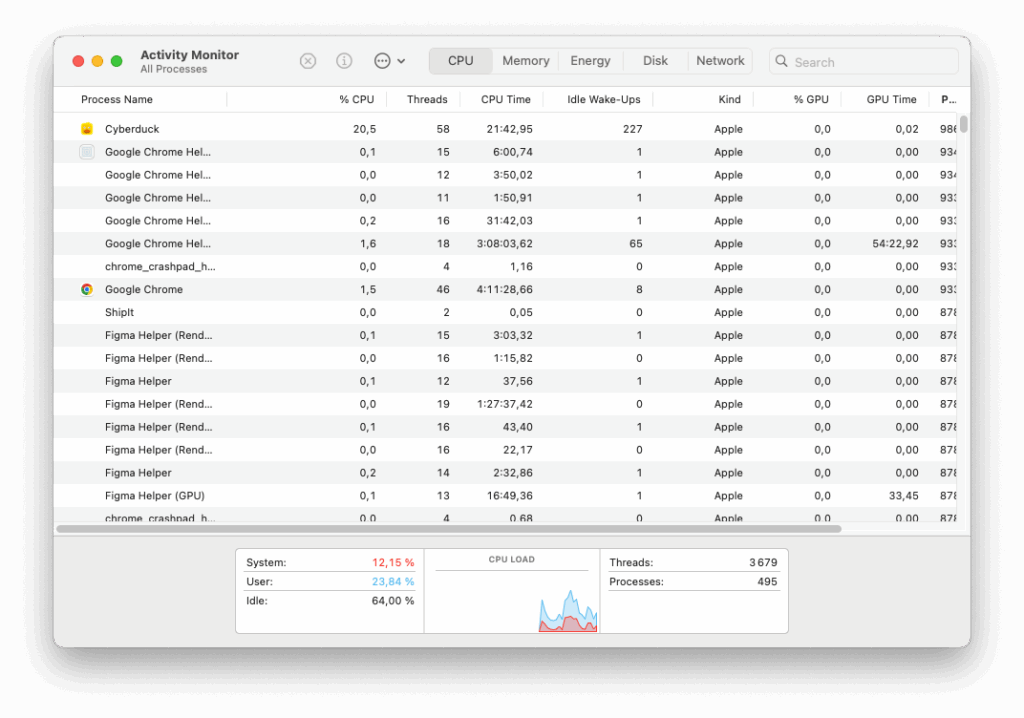
Open Activity Monitor and sort by CPU usage. If you see an app constantly using more than 70% of your processor, it’s likely causing the fan to run nonstop. Quit or manage those apps accordingly.
3. Improve Ventilation Around Your Mac 💨
Make sure your Mac is on a hard, flat surface with good airflow. Avoid using it on couches, beds, or in tight spaces. Consider a laptop stand or cooling pad like the Havit HV-F2056 for better heat dissipation.
4. Reset SMC to Control Fan Behavior 🧠
If your Mac fan behavior feels abnormal, resetting the SMC (System Management Controller) can help. This resets the fan logic and power settings. Here’s how: Reset SMC – Apple Guide.
5. Clean the Inside of Your Mac (Safely) 🧽
Dust buildup can clog vents and block heat, forcing the fan to run constantly. If you’re comfortable opening your Mac, use compressed air to gently clean out internal dust. Otherwise, take it to an authorized service provider.
Extra Tip 💡
Check for rogue apps or browser tabs using energy in the background, especially after sleep or wake cycles. Safari, Chrome, and Dropbox are common culprits.
A loud fan is a symptom, not the cause
Fans respond to heat, and heat usually comes from workload or restricted airflow. In Activity Monitor, sort by CPU and watch the list for several minutes. A process that stays near the top while you are doing little is more useful evidence than the fan sound alone. Browser tabs, video calls, syncing tools, and a stalled app are frequent causes.
If CPU use is low but the fan remains loud, check the physical conditions: hard surface, unobstructed vents, room temperature, charging, and external displays. A connected display can add graphics workload even when no app looks unusual. Restarting is a reasonable test after an update or a stuck app, but it should not be the only fix you repeat.
When fan noise needs service
Get help if the fan makes scraping or clicking noises, never spins during obvious heavy work, or stays at maximum with no visible workload after a clean restart. Those signs can indicate a sensor or hardware issue.
Where AppHalt may help
If Activity Monitor shows a regular app you recognise using resources while you do not need it, AppHalt gives you a reversible option: pause that selected app without quitting it, then resume it later. AppHalt does not repair macOS or guarantee a speed, temperature, battery, or stability result; the effect depends on what the app was doing.
Do not pause an app that is uploading, syncing, backing up, rendering, recording, playing media, or handling a call you need to continue.